Rules & rights · US
NHTSA's 5-Star Safety Ratings, on paper: how the US stars are built — and what carmakers may say about them
How the US New Car Assessment Program awards its stars in frontal, side barrier, side pole and rollover tests, how the Overall Vehicle Score is computed, what the ⚠ safety-concern symbol means, and the advertising rules NHTSA sets for anyone quoting the ratings. All detail is US-market and taken from NHTSA's own pages.
On video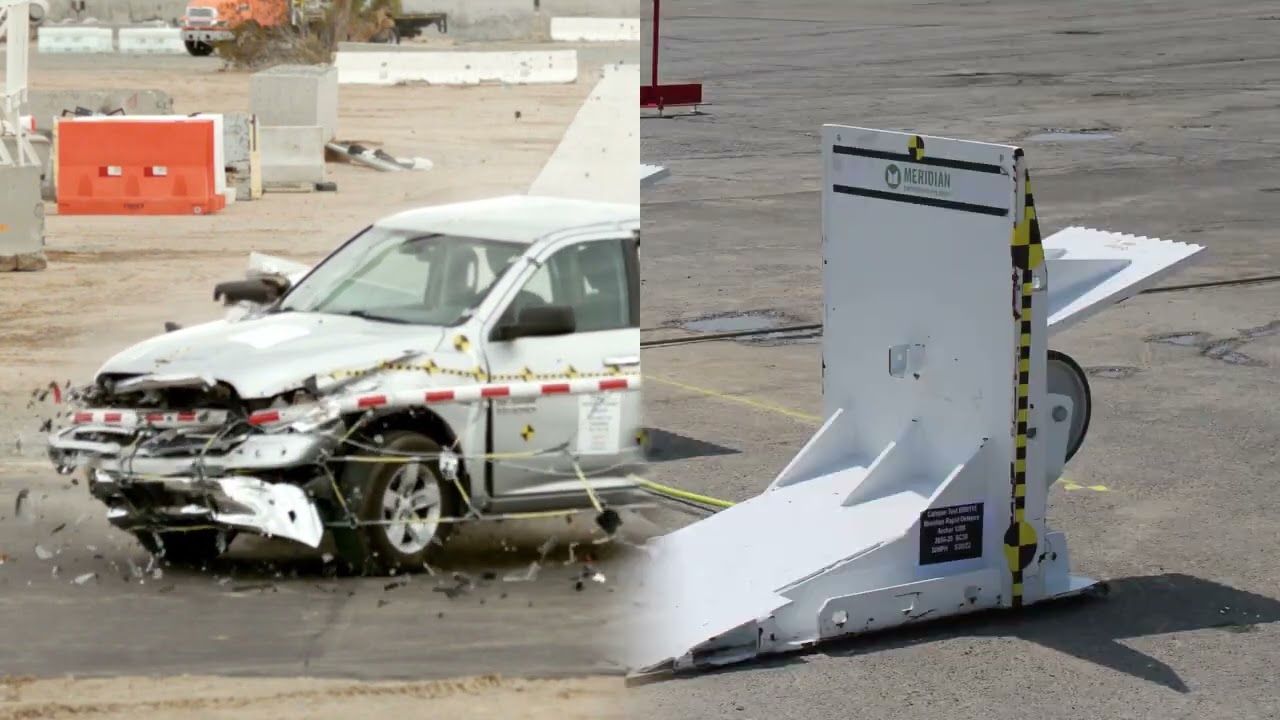 Barrier and Beam Gate Crash Test CompilationMERIDIAN Rapid Defense Group · opens the player
The recording belongs to MERIDIAN Rapid Defense Group and plays from YouTube; opening it lets YouTube see the request. Watch on YouTube.
In the United States, since 2006 the rules have required 5-Star Safety Ratings information on the window labels of new US-market vehicles. The program is run by the National Highway Traffic Safety Administration (NHTSA), whose New Car Assessment Program created it to give consumers information about crash protection and rollover safety "beyond what is required by federal law." One star is the lowest rating; five is the highest. Frontal testing began in 1978, side crash testing in 1996, rollover testing in 2000, and the 5-star system itself has been in consumer use since 1993.
The tests cover the crash types NHTSA says account for the majority of crashes on America's roadways: frontal, side and rollover. Each uses instrumented crash-test dummies, and the injury readings translate into star ratings per crash type. NHTSA also notes that it is the only organization that rates rollover resistance in addition to frontal and side crashworthiness — a point of difference from consumer crash-testing bodies in Europe and Australasia, whose programs this site describes in separate reference files.
The frontal test: same weight, like-for-like
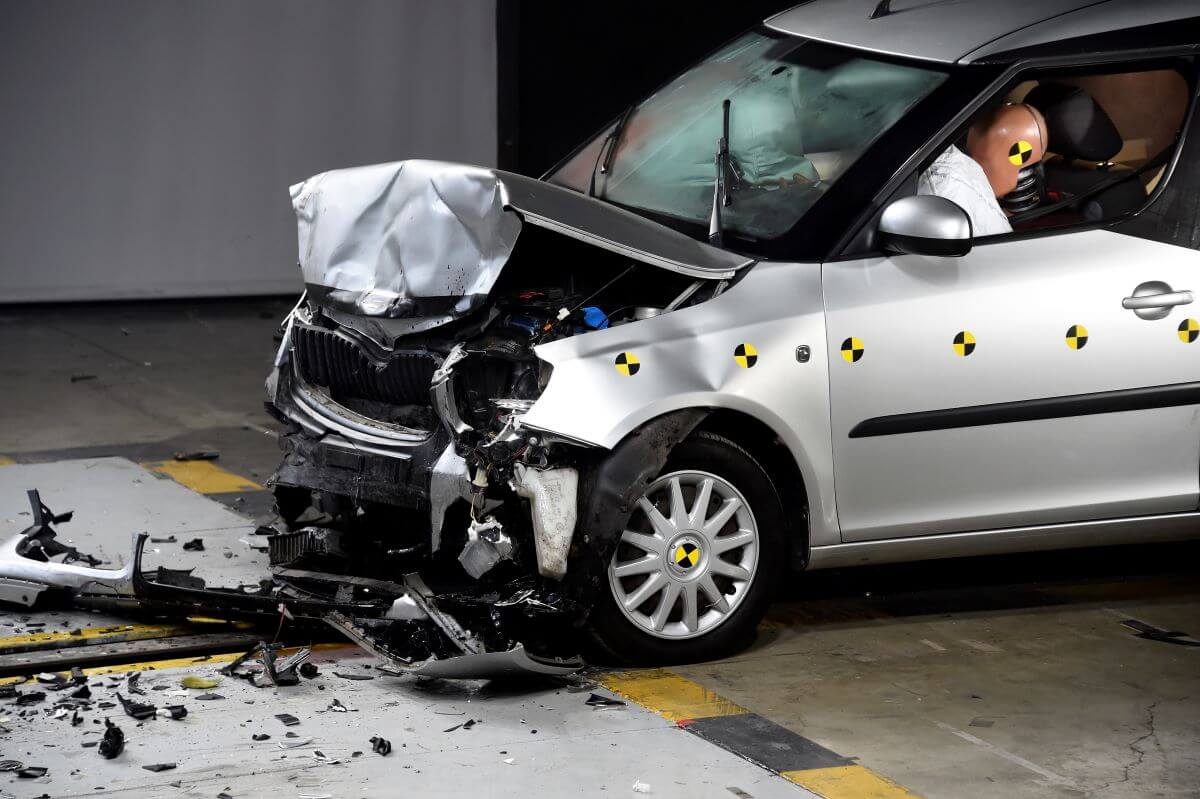
The frontal test is a head-on collision scenario: a vehicle is driven into a fixed barrier at 35 mph. Two dummies are on board — an average-size adult male in the driver seat and a small-size adult female in the front passenger seat, both secured with seat belts. Readings are taken for injury to the head, neck, chest and femur (leg). The scenario the agency describes represents two similar vehicles of the same weight colliding head-on.
That same-weight premise is why frontal ratings cannot simply be lined up across the showroom. NHTSA's rule: frontal crash ratings must only be compared between vehicles from the same weight class, within plus or minus 250 pounds. Vehicles are categorized by class and curb weight — the weight of a vehicle with standard equipment, including the maximum capacity of fuel, oil, coolant and air conditioning. Passenger cars are subdivided, for example passenger cars mini (1,500–1,999 pounds) and passenger cars light (2,000–2,499 pounds). By contrast, side barrier ratings can be compared across all vehicles with each other.
Side pole and rollover
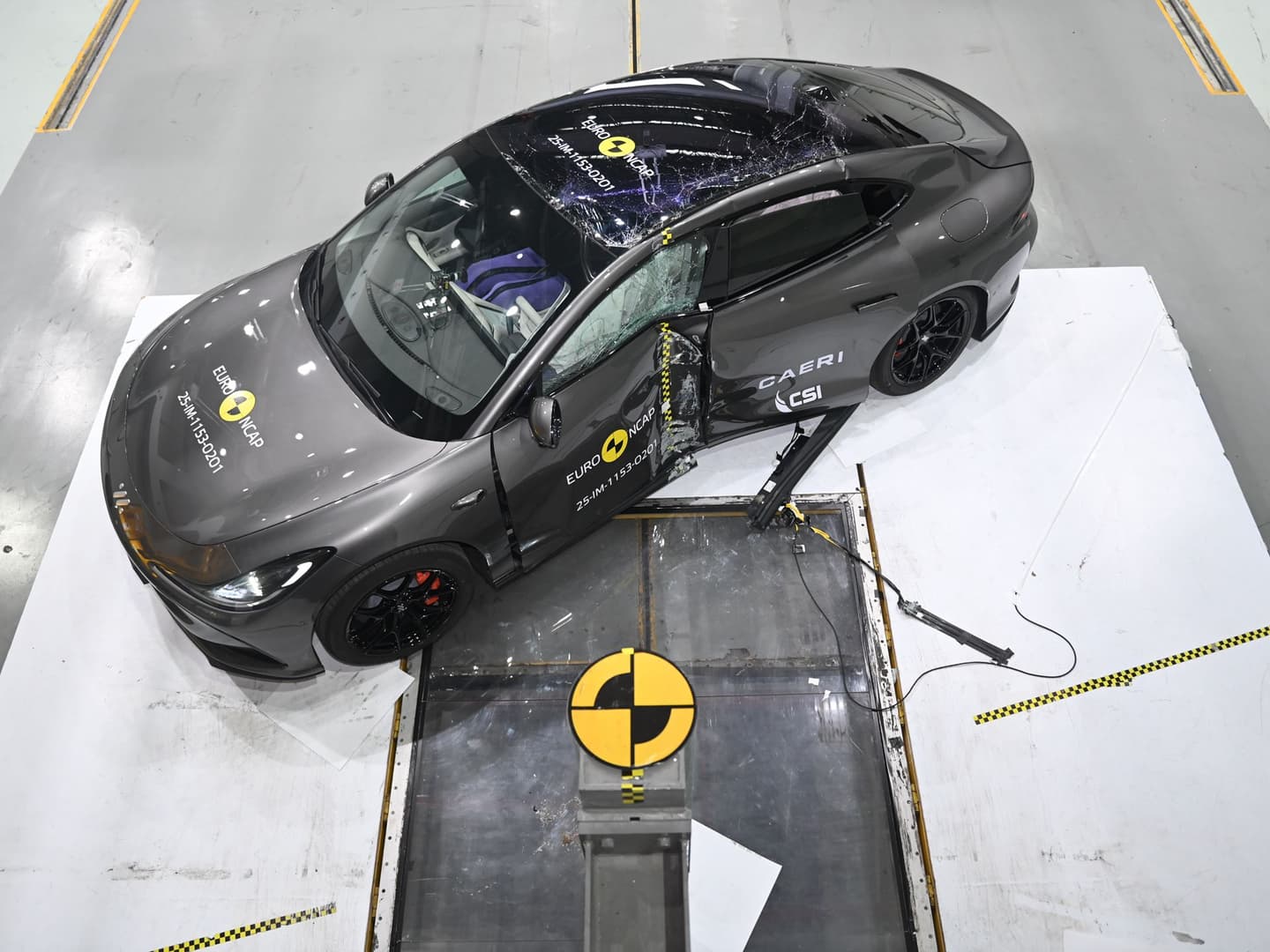
Side protection is measured in two ways. The side barrier test evaluates injury to the abdomen and pelvis among other body regions. The side pole test stages a loss of control: the vehicle, angled at 75 degrees, is pulled sideways at 20 mph into a 25 cm diameter pole at the driver's seating location, with a small-size adult female dummy in the driver seat, belted, and injury measured to the head.
Rollover is different again: it is not a crash test but a driving maneuver that tests whether a vehicle is vulnerable to tipping up on the road in a severe maneuver. NHTSA began rating rollover resistance in 2000 and updated the tests in 2003 to better simulate real-world rollover crashes, which it describes as more dangerous than other types of crashes.
The Overall Vehicle Score and the ⚠ symbol
Since 2010 the program has included an Overall Vehicle Score, itself expressed as a star rating. It is calculated using the probabilities of injury behind the frontal and side ratings, plus a projected probability of injury based on rollover resistance, weighted to reflect the proportion of real-world injuries associated with each crash type. The result is then compared to the average risk of injury across the vehicle fleet to see whether the vehicle's average risk of injury is higher or lower than the average.
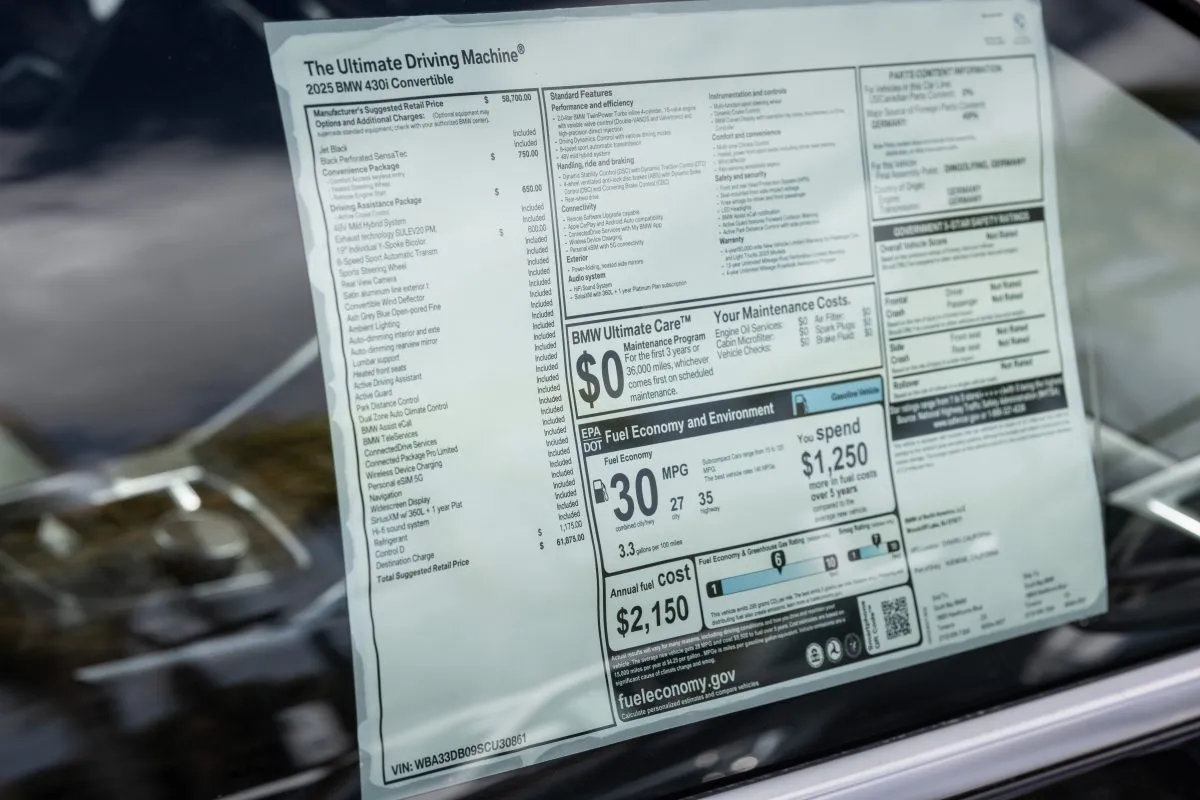
The ⚠ symbol on a label is a separate signal. It alerts consumers to a safety concern the government has about the vehicle — structural failure, or unintended performance of a component such as fuel leakage or a door opening. Safety concerns are not part of the Overall Vehicle Score calculation: a vehicle can carry a high star rating and still have a safety concern, in which case the symbol appears in the relevant crash category and the Overall Vehicle Score area.
The advertising rulebook: what a carmaker may claim
Less well known than the star ratings themselves are NHTSA's guidelines for vehicle manufacturers, dealers and advertising agencies on how the ratings may be used. They apply to all uses — print, online, mobile, TV and radio ads, press releases and other consumer marketing. Among the rules they set:
- Driver and passenger frontal ratings are listed separately and must not be added: a 5-star driver rating plus a 5-star front-passenger rating may not be presented as a "10-star" frontal rating.
- "Under no circumstances may an advertisement claim a vehicle earned a rating higher than 5 stars," and terms such as "double" 5-star rating are barred even when both front seating positions earned 5 stars.
- In side barrier ratings, front and rear seating positions are listed separately and not added; if one is shown, the results for the other should be shown too.
- For vehicles tested with side air bags, phrases must note the model was tested with optional or standard side air bags.
- For a mid-model-year running change, the advertisement should indicate that the revised rating applies only to vehicles built on or after the change date, or from a given Vehicle Identification Number (VIN).
The guidelines also prescribe attribution. Every advertisement using the ratings should carry one of two phrases — "Government 5-Star Safety Ratings are part of the National Highway Traffic Safety Administration's New Car Assessment Program (NHTSA.gov)" or the same sentence naming the U.S. Department of Transportation. On the web, the attribution may appear as a pop-up during a mouse-over. Advertisers may not quote the NHTSA Administrator or any other Federal employee, and TV voiceover language must accurately match the star display shown. Where a manufacturer has notified NHTSA that a vehicle is a "corporate twin" of another vehicle, the appropriate ratings and score may be applied to each twin.
Enforcement has teeth. If an advertiser makes inaccurate or misleading statements about the ratings for a vehicle sold in the United States or in other countries, NHTSA may place a "Buyer Alert" warning on NHTSA.gov next to the vehicle's correct ratings, and knowing misstatements or violations of the guidelines may be referred to the Department of Justice for appropriate legal action. Advertisers also may not use NHTSA ratings or logos for vehicles that have not been tested under the agency's program and for which ratings are not publicly available on NHTSA.gov.
How to check a claim yourself
- Look up the vehicle on NHTSA.gov: ratings are published there with an overall frontal rating, an overall side rating and the Overall Vehicle Score, so you can compare an ad's claim against the agency's own numbers.
- Read each rating per seating position and per crash type — driver and passenger, front and rear, frontal, side barrier, side pole and rollover are separate results that should not be summed.
- Note the weight class before comparing frontal ratings across models; they apply within plus or minus 250 pounds.
- Check whether an ad carries the attribution phrase and whether it distinguishes an overall crash-type rating from the Overall Vehicle Score.
- If a ⚠ symbol appears on the label, look for the stated safety concern, which can include structural failure, fuel leakage or a door opening.
The program details and advertising guidelines above come from NHTSA's own pages, which NHTSA can change. For any model you are considering, the definitive check is the vehicle's entry on NHTSA.gov — the ratings, the Overall Vehicle Score, the ⚠ symbol if one applies and the model year 2026 test list are all published there, and NHTSA's Vehicle Comparison Tool shows 5-Star ratings and recall information at a glance.