Rules & rights
How the IIHS small overlap front test works, on paper
A document-based explainer of the Insurance Institute for Highway Safety's small overlap front crash test: the 40 mph, 25% overlap corner impact, how it differs from the updated moderate overlap test, and what IIHS's own 2023 study found about real-world fatality risk.
On video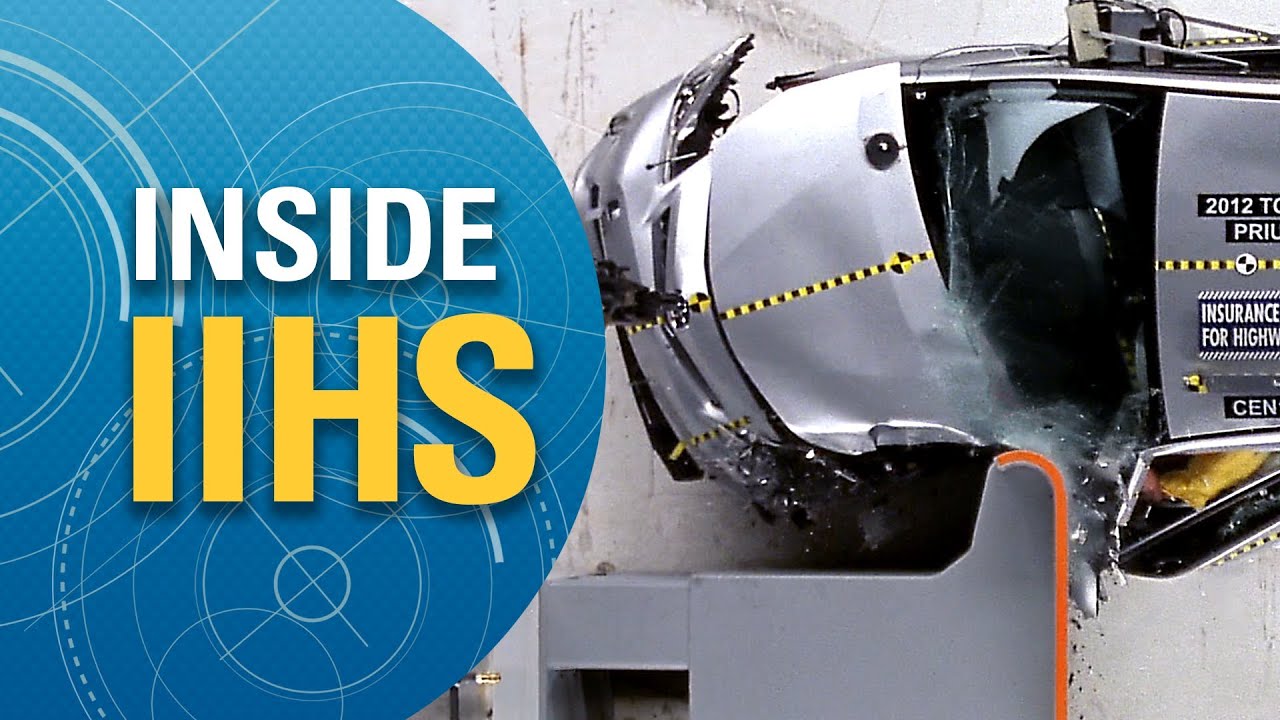 Inside IIHS: Frontal offset testingIIHS · opens the player
The recording belongs to IIHS and plays from YouTube; opening it lets YouTube see the request. Watch on YouTube.
The Insurance Institute for Highway Safety (IIHS) describes itself as an independent, nonprofit scientific and educational organization dedicated to reducing deaths, injuries and property damage from motor vehicle crashes through research and evaluation. It runs a set of crashworthiness tests in which vehicles are rated good, acceptable, marginal or poor. The small overlap front test recreates a frontal corner collision — the kind of crash in which only a narrow slice of the car's front end takes the impact.
On paper, the setup is simple and severe. According to IIHS's explainer page (undated as read on September 28, 2026), a vehicle travels at 40 mph into a rigid barrier with 25% of its front overlapping, and each vehicle is tested twice — once with the overlap on the driver side and once on the passenger side. IIHS says this type of test is especially challenging because there is often no direct impact with the vehicle's frame rail, and therefore the occupant compartment and other structures must manage the bulk of the crash energy. That is why IIHS introduced the driver-side test in 2012: by then, virtually all vehicles were earning good ratings in its older moderate overlap test, yet small overlap crashes still accounted for about a quarter of the frontal crashes killing or seriously injuring drivers of vehicles with good moderate overlap ratings, per an IIHS study of that time.
How the test is run and scored
Each small overlap run uses a Hybrid III dummy representing an average-size male, belted in the driver seat for the driver-side test and in the front passenger seat for the passenger-side run. IIHS then evaluates the vehicle on three fronts, per its test protocol:
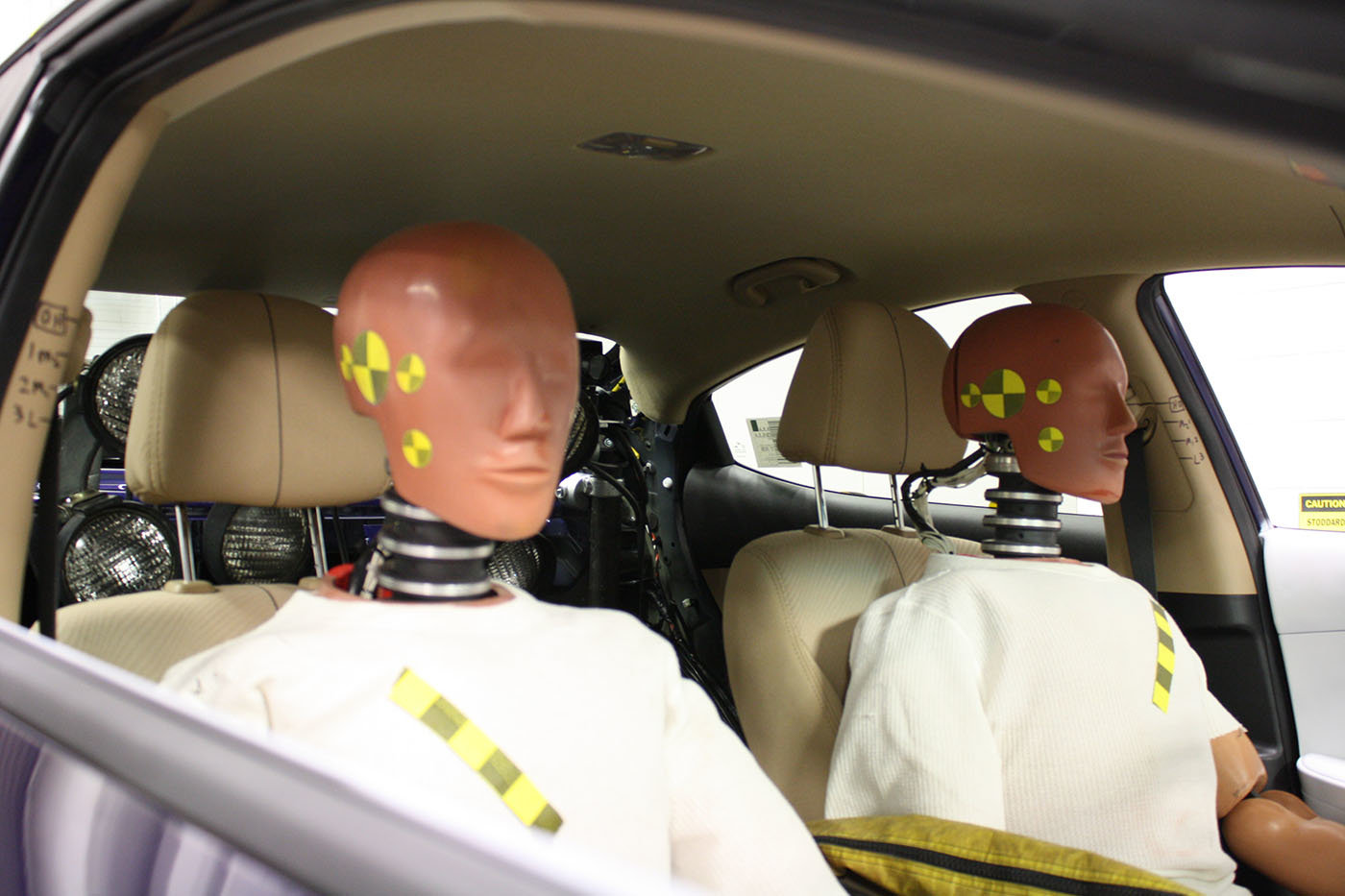
- Intrusion: how far the occupant compartment collapses at key locations during the crash.
- Injury measures: sensors in the dummy's head, neck, chest, legs and feet record injury risk.
- Restraint performance: high-speed film and greasepaint on the dummy show where it contacted the airbags and how well the seat belt and airbags controlled its movement.
One caveat applies to reading the ratings themselves, in IIHS's own wording: the severity of a frontal crash depends on the vehicle's weight, so ratings in this test can only be compared among vehicles of similar weight. A good rating for a small hatchback and a good rating for a full-size pickup are, following that wording, not equivalent comparisons.
How it differs from the moderate overlap test
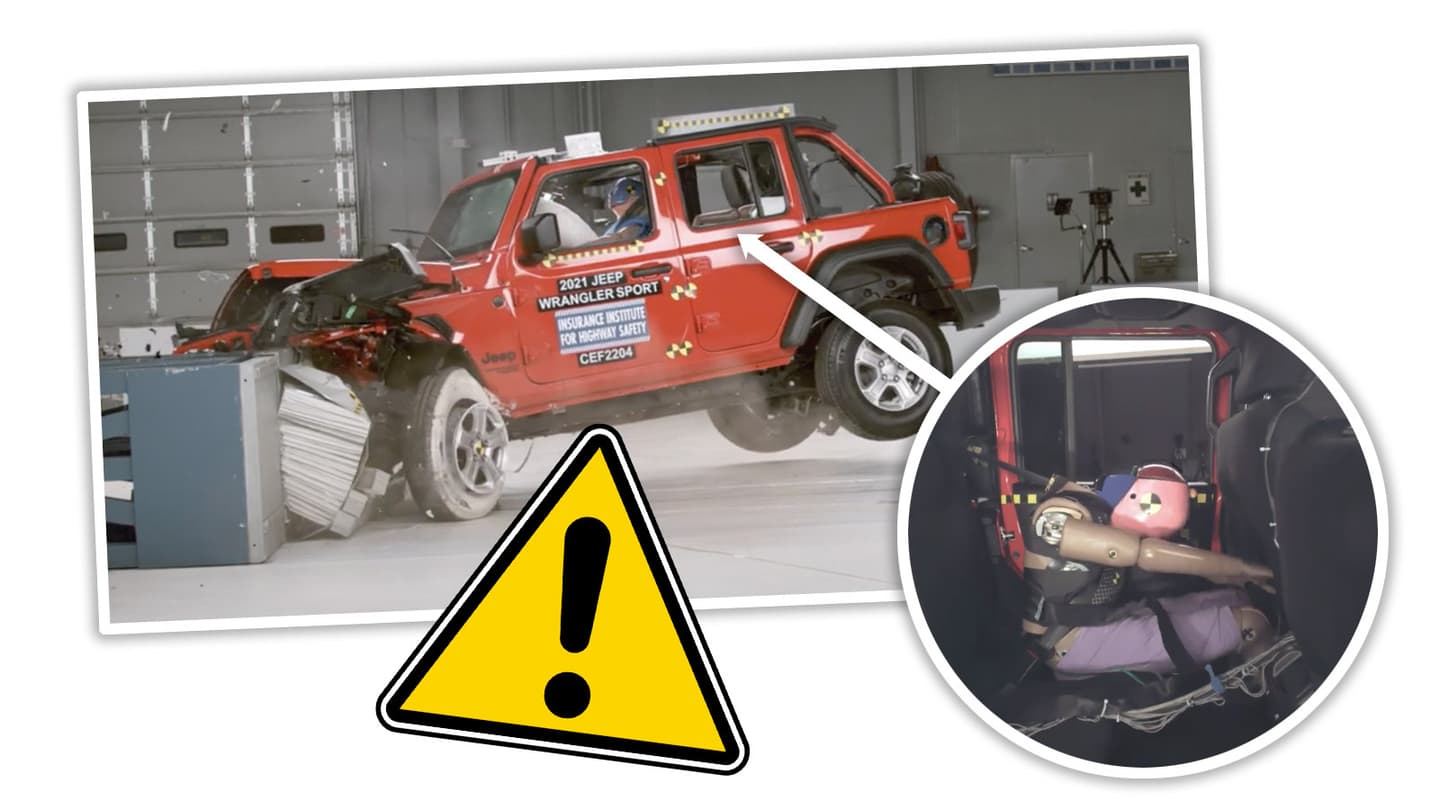
The moderate overlap front test, the older of the two, represents an offset crash between two vehicles each traveling a little under 40 mph. In the test itself, a vehicle travels at 40 mph into a stationary barrier with 40% of the front overlapping — a much wider impact area than the small overlap test's 25%. It was updated in 2022 to incorporate back seat protection: a smaller Hybrid III dummy representing a small woman or 12-year-old child is belted in the second row behind the driver, equipped with a belt-tension sensor and a pressure mat on the chest to assess chest injury risk in the back seat. Both tests use the same 40 mph speed in the laboratory; the difference is the share of the vehicle's width that meets the barrier.
What the test is worth in the real world
IIHS published a study on March 2, 2023 linking its driver-side small overlap ratings to actual fatality outcomes in the United States. Researchers identified make, series and model year for vehicles in police-reported frontal crashes from 2012 to 2020, cross-referenced those with IIHS ratings, and adjusted for vehicle type, curb weight and driver demographics. The result, per the release: a driver in a vehicle rated good in the driver-side small overlap test was 12 percent less likely to be killed in a frontal crash than a driver in a poor-rated one; an acceptable rating was associated with an 11 percent lower risk and a marginal rating with a 5 percent lower risk.
Two limits are worth noting, both stated in the release. The study examined only the driver-side test, because every crashed vehicle has a driver but the passenger seat is often empty, affecting fatality statistics. And because federal crash databases do not provide enough detail to identify small overlap crashes, the sample was not limited to the crash type the test is designed to address — IIHS says the effect of a good rating is likely much larger among those specific crashes. The study is also the issuer's own analysis of its own rating program, and the figures are as published on March 2, 2023.
Checking it yourself
- The test definitions above come from IIHS's own pages, which carry no publication date, so treat the details as current as of the September 28, 2026 capture and re-check the pages before relying on them.
- IIHS publishes its full small overlap front test protocol and technical information alongside the explainer, plus an updated moderate overlap front test protocol.
- IIHS publishes individual vehicle ratings, including driver-side and passenger-side small overlap results, at iihs.org; consult the published rating for the specific model and model year you are interested in.