Rules & rights · AU
ANCAP star ratings, on paper: how a car is scored in Australia and New Zealand, what the TESTED datestamp means, and when a rating goes 'unrated'
The Australasian New Car Assessment Program (ANCAP) rates new vehicles for the Australian and New Zealand markets on a zero-to-five star scale. Here is how its four assessment areas work, why the overall rating is limited by the weakest area, what the TESTED year datestamp tells you, and when a model can end up unrated.

On video Inside the Lab That Keeps Your Car From Killing YouBe Smart · opens the player
The recording belongs to Be Smart and plays from YouTube; opening it lets YouTube see the request. Watch on YouTube.
Most new cars sold in Australia or New Zealand are covered by a safety rating from ANCAP, the Australasian New Car Assessment Program. According to ANCAP, ratings are determined based on a series of internationally recognised, independent crash tests and safety assessments shared with its European counterpart, Euro NCAP (which The Model Year covers in a separate how-it-works entry). Each star rating follows destructive physical crash tests, an assessment of on-board safety features and equipment, and performance tests of active collision avoidance technologies, on a scale from zero to five, with five stars the maximum.
Four stages, one weakest link
ANCAP evaluates a vehicle against four key assessment areas, which it calls Stages of Safety. Safe Driving considers the vehicle technologies and features that assist in providing a safer driving experience for the driver and vehicle occupants; Crash Avoidance assesses the technologies that help prevent or mitigate critical incidents through warnings or autonomous intervention; Crash Protection evaluates the performance of traditional crash protection systems, including vehicle structure, seatbelts, airbags and head restraints, to mitigate injuries to vehicle occupants, pedestrians and cyclists; and Post Crash addresses the 'golden hour' of emergency response through post-crash rescue information and assistance systems. Performance in each stage is published as a percentage score.
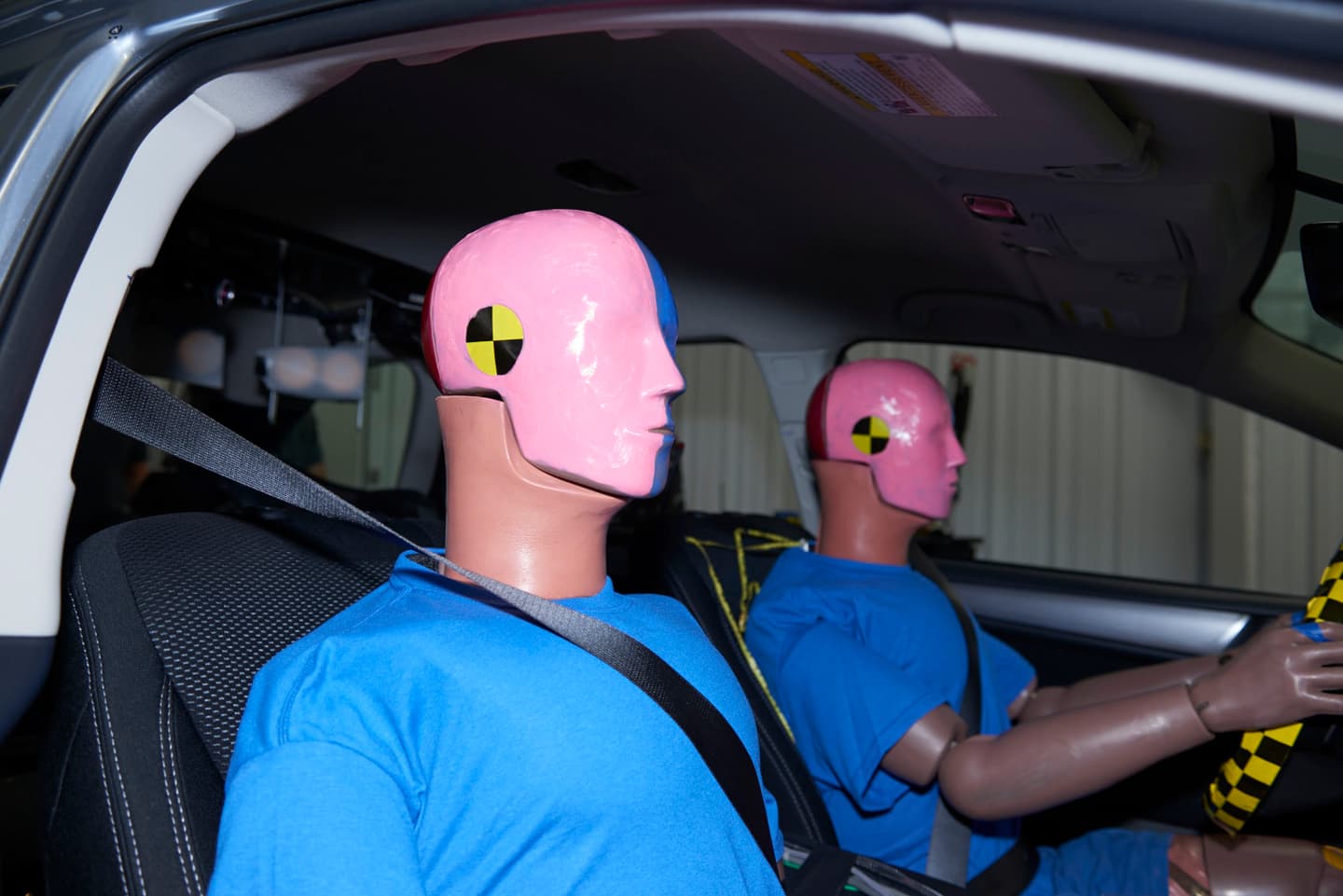
A vehicle must meet minimum score requirements in each of these stages, and ANCAP states that the overall star rating is limited by its lowest performing assessment stage — to encourage vehicle manufacturers to offer balanced safety performance across all areas.
What each star band means
ANCAP describes what each rating signifies. A five-star vehicle provides a high and balanced level of safety performance across all assessment areas. Four stars indicates an adequate level of safety performance that fell short in one or more key assessment areas and may present a higher injury risk in certain scenarios. Three stars signals a reduced level of safety performance, where structural failures or severe cabin intrusion may occur in a crash. Two stars denotes limited safety performance — the vehicle is likely to be lacking a number of, or show inadequate performance of, its modern collision avoidance technologies, and may pose a risk of serious head and body injuries in a crash. One star means a low level of safety performance, and zero stars provides a poor level of structural and/or active safety performance and may lack basic safety features.

The TESTED datestamp and why the year matters
According to ANCAP, every three years the tests and test criteria used to rate vehicles become harder to meet, so a three-star result from one year is not measured against the same standard as a three-star result from several years earlier. Each rating therefore carries a TESTED year datestamp, which ANCAP says indicates the year and criteria under which the vehicle was assessed. ANCAP recommends choosing a vehicle with the highest safety rating possible, with a datestamp of no older than six years, so that comparisons are made between vehicles rated to similar test criteria.
Ratings do not expire, but they can stop applying to new cars
Per ANCAP, a rating held by a car never expires: once tested and rated, the rating remains valid for the life of that vehicle. Separately, ANCAP applies rating validity periods that determine how long a vehicle manufacturer can use that rating to promote newly-built vehicles; ANCAP says these periods are set by it and generally align with typical model lifecycles and its rating criteria. According to ANCAP's FAQ, if a model remains in production beyond its rating validity period and is not re-assessed to ANCAP's latest criteria, newly-built vehicles of that model become 'unrated', while vehicles built during the validity period retain their ANCAP safety rating.
Facelifts complicate the picture. According to ANCAP's FAQ, in general it does not re-test facelifted models within the same model series unless significant structural and specification changes that would improve the rating are introduced; similarly, if safety features are removed, ANCAP may re-assess the vehicle and issue a revised rating.
Unrated is not a failing grade — or a pass
Not all vehicle models have been tested, so an unrated vehicle is one whose safety performance has not been assessed and is unknown. ANCAP states plainly that the safety performance of a vehicle cannot be assumed or inferred based on the safety performance of other similar vehicles that are rated or previous generations of the same model.
Coverage is not universal either. ANCAP's FAQ says vehicles tested through its program include new passenger, SUV and light commercial vehicles entering the Australian and New Zealand markets, selected for testing based on a variety of factors including the volume of vehicles sold, and that a small percentage of new vehicle models are not able to be rated and are classified as 'unrated'. ANCAP also notes that in some cases ratings may not be available for some time after market launch.
Scope limits worth knowing
The following points are as stated on ANCAP's FAQ pages at the time of preparation; programs and scope can change, so check the current ANCAP material before relying on them.
- The star rating program covers new light vehicles including passenger cars, SUVs and light commercial vehicles with a GVM up to 3.5 tonnes in the Australian Design Rule (ADR) regulatory categories of MA, MB, MC and NA; larger, or NB category, vehicles (medium goods vehicles) do not currently fall within ANCAP's star rating scope, per ANCAP.
- ANCAP instead tests and publishes results for a range of NA and NB category commercial vans through its Commercial Van Safety Comparison, which focuses on active collision avoidance and scores vans using a category ranking of PLATINUM, GOLD, SILVER, BRONZE and NOT RECOMMENDED rather than stars.
- ANCAP's star ratings for new vehicles are distinct from the Used Car Safety Ratings (UCSR), research focussing on second-hand cars that is compiled by the Monash University Accident Research Centre (MUARC); ANCAP says the two schemes differ in the way their ratings are determined.
- ANCAP tests are undertaken on standard vehicles, without bullbars or other accessories fitted, and in general ANCAP does not set requirements for, or assess, aftermarket products or vehicle modifications, including repairs.
- Ratings reflect the vehicle as supplied new and unmodified in Australia and New Zealand; a modified or repaired vehicle is outside what the rating assessed.
To check a specific vehicle, look up the model on ANCAP's website and read the rating alongside its TESTED year datestamp, the percentage scores for each of the four assessment stages, and whether the car you are considering was built within the rating's validity period. For unrated models, ANCAP invites buyers who cannot find a rating for their car and would like to check if there is one available to contact ANCAP directly, rather than assume anything about that vehicle's safety performance.