How it works · CN
LFP overtakes: what three IEA documents record about the shift in battery chemistry — and who refines what
Lithium iron phosphate (LFP) batteries reached close to half the global electric car market, according to the IEA's Global Critical Minerals Outlook 2025, and passed half of EV batteries by 2025 per an IEA commentary dated 13 February 2026. Their supply chains — from cathode material to battery-grade phosphoric acid and manganese sulfate — remain heavily concentrated in China. Here is what the documents, with their dates, record; the piece holds no driving impression, no measurement of ours and no reliability verdict.
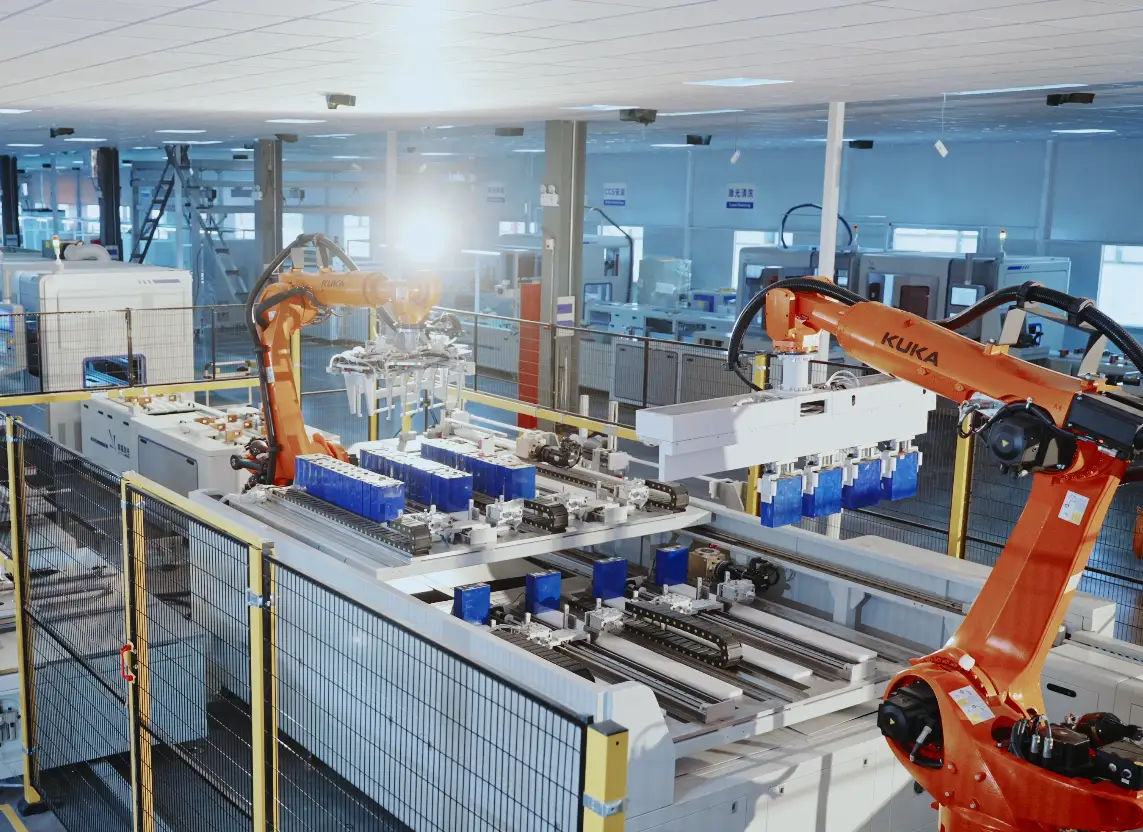
On video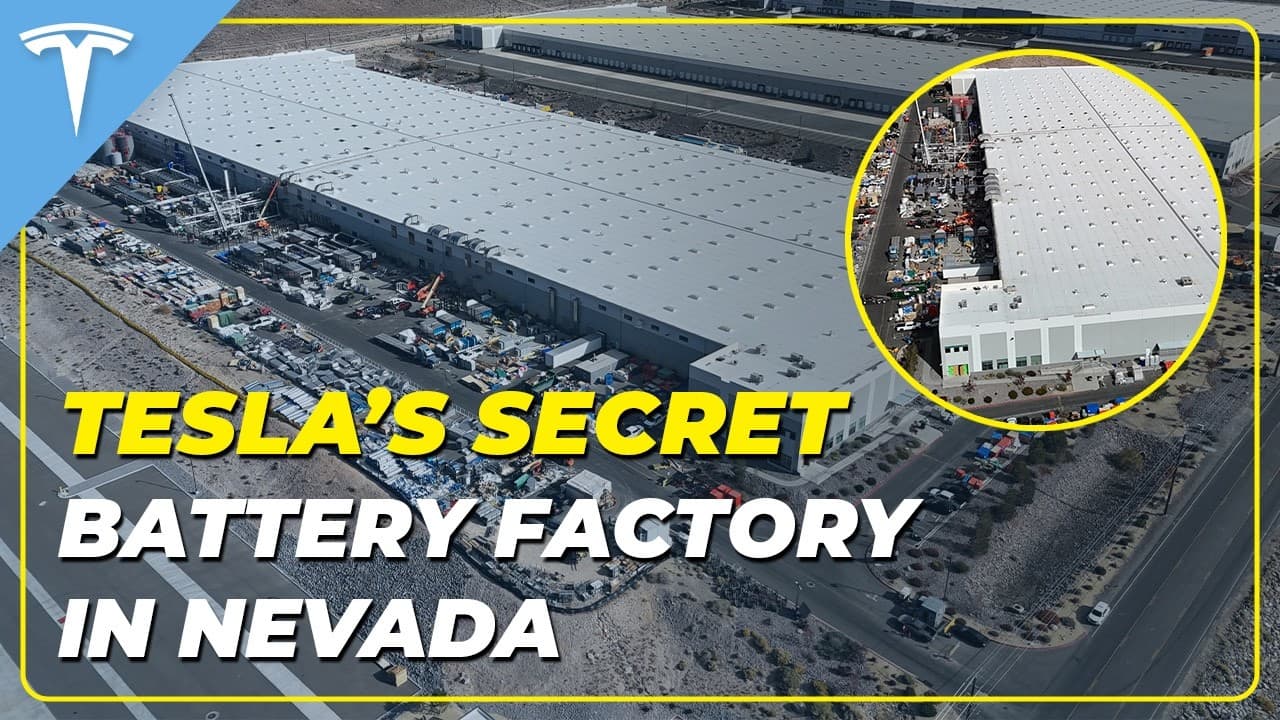 Tesla's Secret LFP Battery FactoryZanegler Tesla Semi Advocate · opens the player
The recording belongs to Zanegler Tesla Semi Advocate and plays from YouTube; opening it lets YouTube see the request. Watch on YouTube.
In less than a decade, the chemistry inside electric car batteries has flipped. In 2020, lithium iron phosphate — the cheaper, cobalt-free chemistry sold as LFP — took under 10% of the global electric car market, while nickel-based NMC cells dominated. By the time the International Energy Agency's Global Critical Minerals Outlook 2025 was written, LFP supplied almost half of that market, a shift the IEA credits to improved performance and lower costs. The documents behind this explainer are IEA publications, carrying their own dates and covering the global market; no market-specific figure below is transferred between jurisdictions.
The economic gap has widened since. In an IEA commentary published on 13 February 2026, the agency records that in 2025 LFP battery prices fell by more than 15%, against less than 5% for NMC, making LFP batteries on average more than 40% cheaper. That price advantage translated into market share: per the same commentary, LFP accounted for over half of EV batteries and over 90% of battery energy storage systems globally in 2025.
Where the supply chains sit
The IEA's minerals outlook is blunt about geography. For 2024, it records that over 98% of LFP cathode material and LFP battery cells were produced in China, compared with less than two-thirds of nickel-based cathode material and 60% of nickel-based battery cells. The IEA attributes China's advantage to access to low-cost raw materials from an integrated supply chain, cheaper and more efficient production equipment with lower lead times, and considerable LFP patents.
Concentration does not stop at the cathode. Two refining steps sit further upstream, and the IEA's 2025 outlook places them heavily in China — 75% of global PPA supply and 95% of battery-grade manganese sulfate supply, by its figures:
- Battery-grade purified phosphoric acid (PPA), needed to make LFP cathodes: three-quarters of global supply comes from China, and the IEA anticipates a PPA deficit as early as 2030.
- Battery-grade manganese sulfate, used across several chemistries: China holds 95% of global supply, and the IEA notes that, based on the project pipeline, supply would cover only 55% of demand in its STEPS scenario in 2035.
- Sodium-ion batteries, sometimes proposed as a diversification route: the IEA finds their upstream inputs (soda ash, caustic soda, biomass) more diversified, with the United States and Europe already in key roles, but states their downstream supply chain — cell, cathode and hard carbon anode — remains dominated by China.
The wider battery market, by the 2026 commentary
Cell production is similarly concentrated. The IEA's February 2026 commentary states that China manufactured well over 80% of all batteries in 2025, with the European Union and the United States accounting for most of the rest, each at a similar share. It adds that battery factories in Europe and the United States rely heavily on imports for the majority of their battery components, which come mostly from China, and that China has introduced export controls on key battery components since 2023 — including, per the IEA's note, on cells with energy density greater than 300 Wh/kg and lithium-rich manganese-based chemistry.
Prices also differ by region. The same commentary, based on Bloomberg New Energy Finance data, records that in 2025 battery pack prices in China were 30% lower than in the United States and 35% lower than in Europe, and that LFP now powers well over half of electric car sales in emerging and developing economies — double the 2023 share — driven by imports of Chinese-manufactured vehicles and LFP batteries.
What comes next, and what it claims to offer
The IEA's innovation commentary, which frames a discussion at the agency's Energy Innovation Forum 2025 in Toronto on 29 October 2025, gives the emerging-chemistry ledger clearly labelled as forward-looking and, in parts, still in the prototype stage. Solid-state batteries promise longer ranges and enhanced safety, but the IEA notes the advantages most often cited come from designs currently in the prototype stage. Among the most advanced, Chinese firm BYD plans to sell its first EV using all-solid-state batteries from 2027. Sodium-ion — shown in the chart as CATL's Naxtra battery — could offer technology diversification but is unlikely to provide a competitive opening for new entrants, the IEA writes. Lithium-sulfur batteries, attracting attention in the United States, store more energy per kilogram but need more space for the same amount of energy, limiting mainstream EV appeal for now.
The same commentary records why incumbents are hard to displace: lithium-ion prices fell about 30% between 2020 and 2024, and pack energy density rose by over 50% for NMC and about 65% for LFP batteries — in the IEA's wording, without compromising safety or longevity. Fast-charging capability also improved: in early 2025, BYD and CATL released batteries that the IEA says enable 400–500 kilometers of additional range in five minutes. New technologies, the IEA expects, would still capture a relatively small share of the 2030 market.
These documents describe markets as the IEA's analysts modelled them at their stated dates: the 2025 outlook carries 2024 supply-chain figures, and the February 2026 commentary marks some 2025 values as estimated. The solid-state and sodium-ion material is explicitly partly prototype-stage or announcement-based, and vendor plans such as BYD's 2027 target are the company's plan, the IEA's reporting of it — not a proven date. Price figures rest on IEA analysis based on Bloomberg New Energy Finance, and regional prices are defined as weighted averages across applications. The share of LFP in EV battery sales is defined as the battery capacity of EVs registered in each region, with two- and three-wheelers excluded, so it is not a count of vehicles.
To check these figures yourself, read the three IEA pages cited — the "Beyond NMC batteries" chapter of the Global Critical Minerals Outlook 2025, the commentary "Global battery markets are growing strongly – and so are the supply risks" dated 13 February 2026, and the IEA innovation commentary citing its 2025 report — all published by the IEA in Paris under CC BY 4.0. For the battery fitted to a specific car, the seller's own specification sheet for that market and model year is the document to request, so that the figure you are given matches the car itself rather than another version.