Rules & rights · US
US federal EV charging rules on paper: 23 CFR 680's connector requirements, the FHWA's J3400 request for information, and the pending ADA/ABA accessibility proposal
A rules-and-rights reference for the United States market, built from three Federal Register documents: the FHWA's February 2023 NEVI Standards final rule (23 CFR part 680), the FHWA's March 2024 request for information on the SAE J3400 connector, and the US Access Board's September 2024 proposal on EV charging station accessibility. The first two are in force; the third is a proposal, not a requirement.
On video Don't overthink electric car charging (we should be doing it differently)Technology Connextras · opens the player
The recording belongs to Technology Connextras and plays from YouTube; opening it lets YouTube see the request. Watch on YouTube.
Three Federal Register documents frame what United States federal rules ask of EV charging equipment and of the stations themselves. The oldest and most concrete is the FHWA's 'National Electric Vehicle Infrastructure Standards and Requirements' final rule, published February 28, 2023, which created 23 CFR part 680 — the first national standards for federally funded charging stations in the US. The second is the FHWA's request for information on the SAE J3400 connector, published March 6, 2024, which asks whether those minimum standards should be updated as the industry shifts away from the CCS Type 1 connector the rule requires. The third, published by the US Access Board on September 3, 2024, is a notice of proposed rulemaking to add EV charging stations to the ADA and ABA accessibility guidelines — a proposal, not a rule in force.
This is a reference to what those documents say as published, not a report of new developments. The comment due date for the J3400 request for information (April 5, 2024) has passed, and the accessibility item remains a proposal; readers should check the Federal Register dockets for any subsequent action.
What 23 CFR 680.106(c) requires of connectors
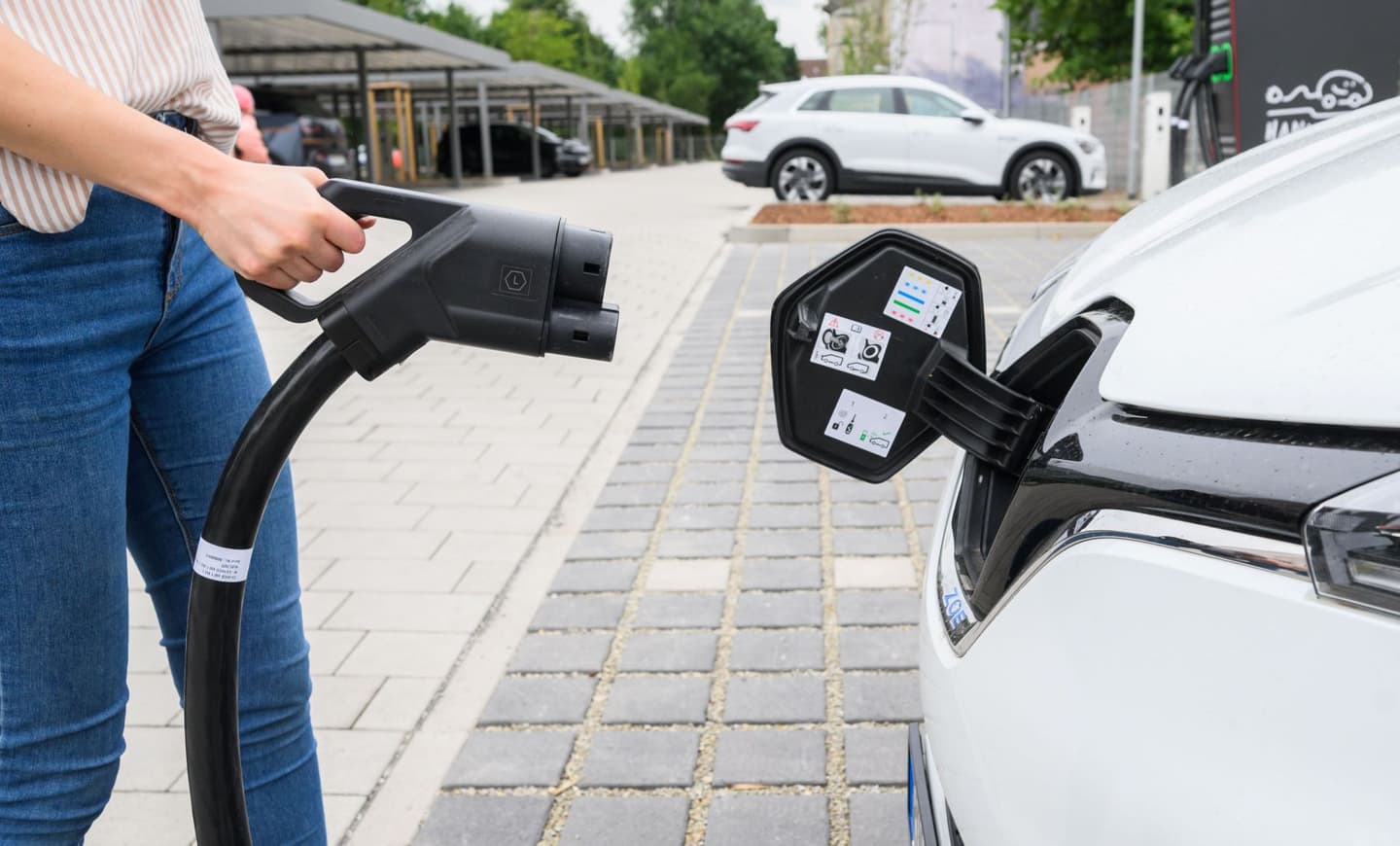
The connector rule sits in § 680.106(c) of the February 2023 final rule. In the FHWA's own text: 'Each Direct Current Fast Charger (DCFC) charging port must be capable of charging any Combined Charging System (CCS)-compliant vehicle and each DCFC charging port must have at least one permanently attached CCS Type 1 connector.' For alternating current, the rule states that 'each AC Level 2 charging port must have a permanently attached J1772 connector and must charge any J1772-compliant vehicle.' The rule also permits permanently attached CHAdeMO connectors, using only FY2022 NEVI Funds.
Two points about scope matter. First, 23 CFR part 680 applies to chargers funded under the National Electric Vehicle Infrastructure program; the rule's purpose is to 'prescribe minimum' standards for those projects, and it is not a general connector mandate for every charger in the United States. Second, the rule already anticipated non-CCS plugs: it allows 'permanently attached non-proprietary connectors (such as NACS) to be provided on each charging port so long as each DCFC charging port has at least one permanently attached CCS Type 1' connector, and the FHWA modified the rule language so that a port remains accessible through a CCS connector — avoiding, in the agency's words, 'an entire charging port that a consumer cannot use if there are only non-CCS connectors attached to it.'
The J3400 request for information: how FHWA framed the shift
By March 2024 the landscape had moved. The FHWA's request for information notes that the Society of Automotive Engineers published a Technical Information Report for the J3400 connector standard in December 2023 — the standard also known as the North American Charging Standard Electric Vehicle Coupler — and that 'J3400 utilizes the same connector and pins for AC and DC charging.' The document records the agency's view of industry timing: 'several additional auto manufacturers have announced an intention to adopt J3400 with full vehicular integration beginning in 2025, and through adapters as early as 2024.' Those are statements from the Federal Register document, not forecasts of ours.
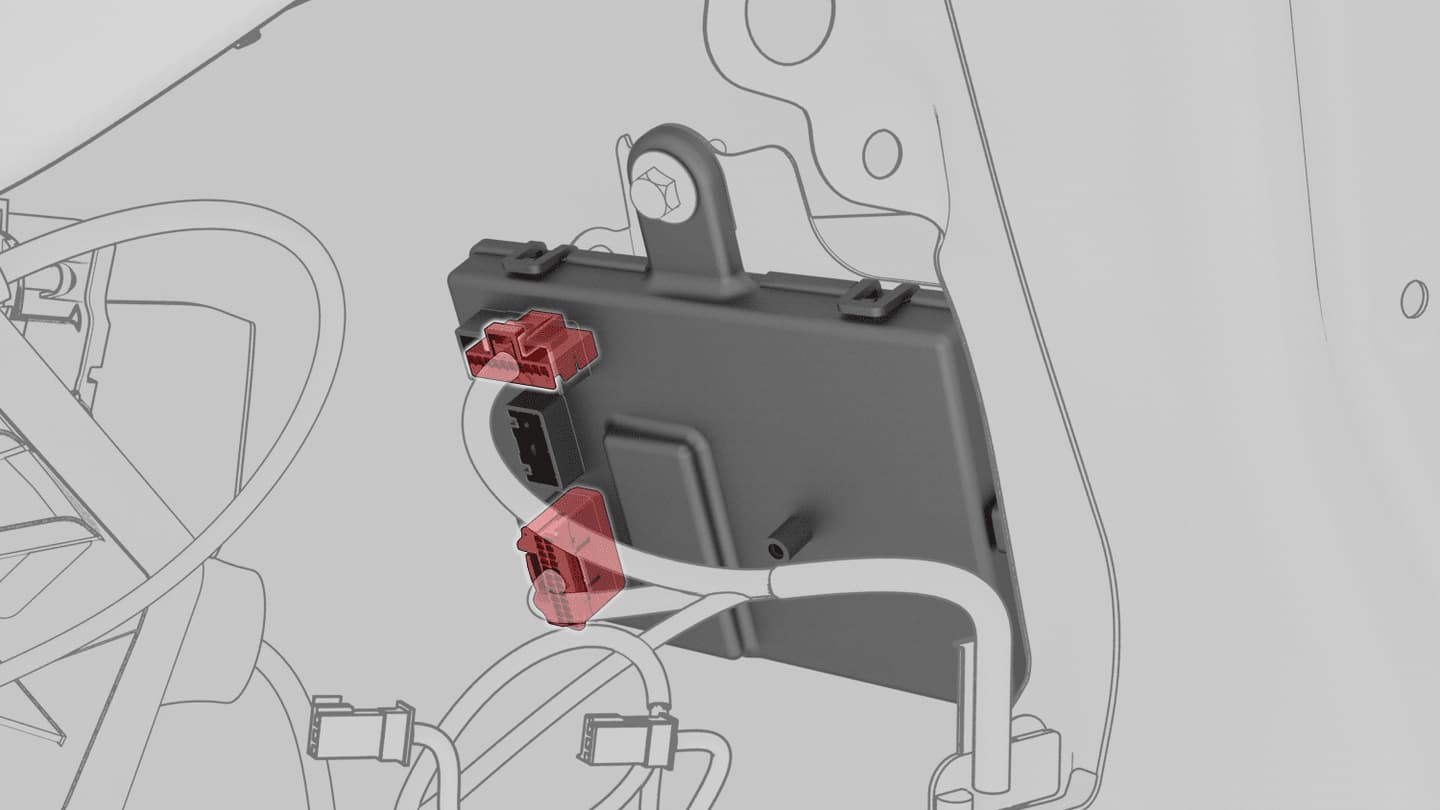
The request for information set out options the agency was weighing, without deciding any of them. If J3400 connectors were required, the design-based approaches asked about were:
- Approach 1: include both J3400 and CCS Type 1/J1772 connectors on each port
- Approach 2: include a specified number of each connector type at each charging station, with a question about the optimal ratio
- If no J3400 requirement followed: provide at least one adapter at each station, or require customers to bring their own adapters
- Beyond designs, the FHWA asked what performance-based alternatives — standards that 'specify a level of service and types of vehicles a charger must support without' naming a specific connector — would work in place of referencing J3400, J1772, or ISO 15118 by title
The RFI also asked practical questions that remain open in its text: whether it is practical to retrofit existing DCFC units with a J3400 connector, what that installation would cost, whether combined-cable designs such as Tesla's Magic Dock differ in power level or reliability from two separate cables, and what the expected useful life of CCS, J1772 and J3400 connectors is. The comment due date was April 5, 2024, under docket FHWA-2023-0054; the document itself announces no rule change.
Accessibility: what the Access Board proposal would do
The Access Board's September 3, 2024 notice is a proposed amendment to the ADA and ABA accessibility guidelines, not a rule in force. It would add a new section 249, under which 'EV chargers and EV charging spaces shall be provided in accordance with 249,' with an exception for 'EV charging stations used exclusively for buses, trucks, other delivery vehicles, and law enforcement vehicles.' The proposed scoping counts accessible spaces per charging station, not per site: 'Where there is more than one EV charging station on a site, the number of EV charging spaces complying with 507 shall be calculated according to the number of EV charging spaces at each charging station.' The Board's illustrative example: two stations with 10 and 8 spaces each would each need at least one accessible space, while a single 18-space station would need one.
The proposal also raises connector-weight questions. The Board proposes in 506.2.3 to require that 'EV charging cables that exceed a weight of 5 pounds provide a cable management system,' citing concern for people who use mobility devices, and asks in a public comment question 'Are adapters for alternate connectors provided by the EV Charging station or do individuals bring adapters with them if the EV Charger connector is not compatible with their vehicle?' These questions indicate what the Board was still deciding when it published the NPRM.
How to verify any of this yourself
Every statement above comes from a Federal Register document that is freely readable online. To check the current state of the rules:
- Read the final rule at federalregister.gov under docket FHWA-2022-0008, published February 28, 2023, and check § 680.106(c) for the connector text in force
- Read the request for information at federalregister.gov under docket FHWA-2023-0054, published March 6, 2024, and then check that docket on regulations.gov for any FHWA response or follow-on rulemaking
- Read the Access Board NPRM published September 3, 2024, and check the ADA/ABA rulemaking docket to see whether section 249 was finalized, withdrawn, or amended — it remains a proposal unless a later Federal Register notice says otherwise
From the source
- Federal Register :: Request for Information on the J3400 Connector and Potential Options for Performance-Based Charging Standards
- Federal Register :: National Electric Vehicle Infrastructure Standards and Requirements
- Federal Register :: Americans With Disabilities Act and Architectural Barriers Act Accessibility Guidelines; EV Charging Stations