Rules & rights · UK
UK number plates and private registrations: what DVLA's own GOV.UK pages require
A rules-and-rights explainer for UK drivers, drawn from DVLA's GOV.UK pages on displaying number plates, assigning a private number, and keeping or selling one: plate materials and markings, eligibility limits, the duty to fit new plates before driving, who to tell, renewal every 10 years, and the warning about sharing V750 or V778 scans.
On video UK Number Plates ExplainedTwin-Cam with Ed Westby · opens the player
The recording belongs to Twin-Cam with Ed Westby and plays from YouTube; opening it lets YouTube see the request. Watch on YouTube.
Anyone buying a new or used car in the UK will see DVLA's rules at work on the front and rear bumpers, and anyone buying a private (personalised) registration will run into a separate set of requirements on top. DVLA's GOV.UK guidance covers both: physical rules for what a number plate must be made of and carry, and procedural rules for putting a private number on a vehicle or holding it for later. This piece reports what those pages say and when, so you can check your own plates and paperwork against the source.
The market is the UK, the issuing body is DVLA, and the rules below are as stated on GOV.UK when it was read for this piece - government pages are updated, so treat any date-sensitive detail as subject to change.
What a number plate must physically be
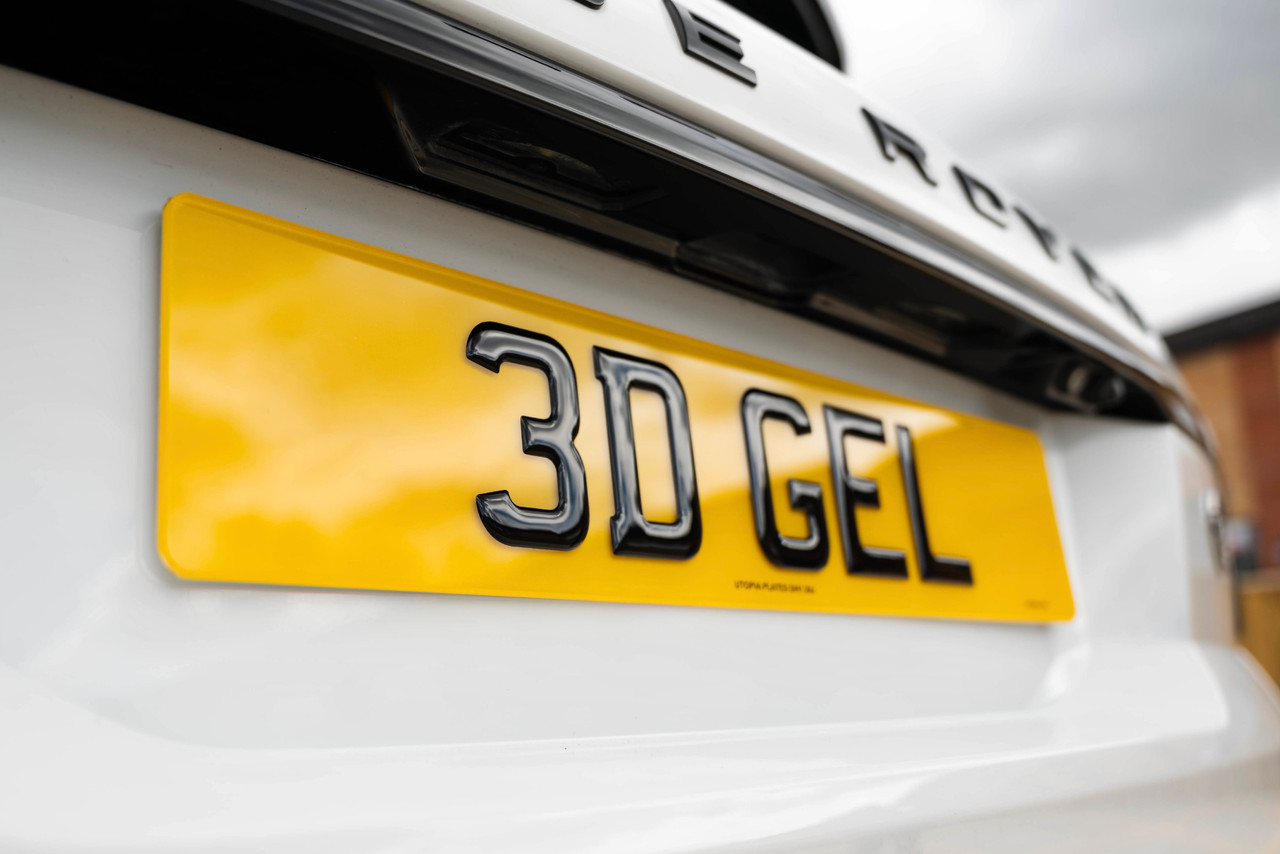
DVLA's guidance on displaying number plates lists the requirements a UK plate must meet. The plate itself has to be reflective, with character colour set by position: black on white at the front, black on yellow at the rear, with no pattern behind the characters. Every plate must be marked with the supplier's details and a British Standard number - BS AU 145e for plates fitted after 1 September 2021 - and the characters themselves must not be removable or reflective.
The page also allows some extras within the standard. Plates fitted after 1 September 2021 must show the characters in a single shade of black, and may - among the permitted options - be raised (3D) characters, carry certain flags, symbols and identifiers, or a green flash for a zero-emission vehicle. Motorcycles and motor tricycles registered on or after 1 September 2001 display a rear plate only, with the characters on two lines, while earlier machines may also carry a front plate without being required to. A trailer must show the same plate as the towing vehicle, fixed to the rear when more than one trailer is towed.
Characters must also be a certain height and size; the GOV.UK page points readers to the INF104 leaflet for the measurements, and INF291 for trailer plates.
Putting a private number on a car
Assigning a private number requires the right paperwork. If you bought the number, DVLA issues a V750 certificate of entitlement; if you took a number off another vehicle you own, you get a V778 retention document or an online reference number. Either route can be applied online or by post, and DVLA says applying online or by post is free. The vehicle must be registered with DVLA in the UK, able to move under its own power, need an MOT or HGV test certificate by type, be available for inspection, and have been taxed or on a SORN continuously for the past 5 years (with conditions if the SORN lasted longer).
Some combinations are barred outright. DVLA lists three exclusions:
- You cannot assign a number starting with 'Q' or 'QNI'
- You cannot put a private number on a 'Q' registered vehicle
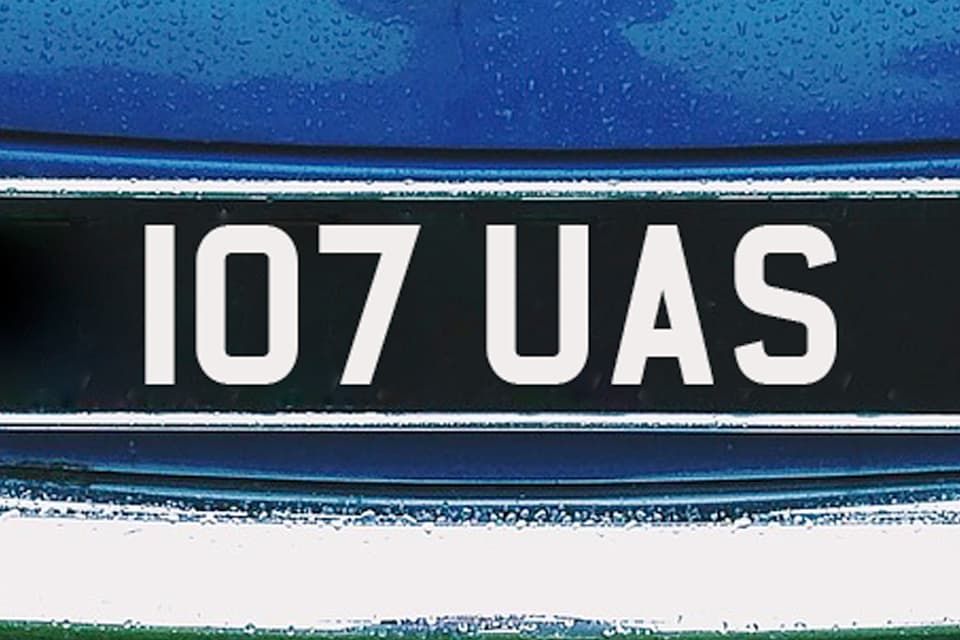
- You cannot use a private number that makes a vehicle look newer than it is - DVLA's own example is an '07' registration number on a 2003 registered vehicle
Age works the other way for historic vehicles: DVLA says owners of a historic (classic) vehicle need a current MOT certificate for the assignment even if the vehicle is usually exempt from MOTs.
New plates before you drive, and who to tell
Timing matters at both ends of the process. DVLA says to be ready with new plates as soon as you apply (the number is assigned immediately if no inspection is needed), and states plainly that the vehicle must not be driven before the new plates go on. The vehicle must not be sold or disposed of until the new V5C log book arrives - usually within four weeks, and if it has not come after six weeks and DVLA was not notified, a replacement costs £25 per DVLA's guidance read for this piece.
The new registration number must then be passed on to the organisations that track it. DVLA names the insurance company as a must-tell, and lists examples of the charge accounts to update, including:
- the Congestion Charge
- the Low Emission Zone Charge
- the Ultra Low Emission Zone Charge
- the Dart Charge
- charges for driving in Clean Air Zones
DVLA warns that failing to update the details and then entering one of those zones can bring a penalty charge, and adds that vehicles with Clean Vehicle Retrofit Accreditation scheme certification need to notify the scheme of the new number too.
Keeping, renewing and selling a private number
A private number does not have to sit on a car. DVLA's overview page explains that a number can be taken off a vehicle and put 'on retention' for later use, with a V778 retention document as proof of the right to use it; a number can also be sold, or moved between vehicles by taking it off one and assigning it to another, with form V317 as the postal route. One recurring obligation runs through the guidance: the right to use an unassigned number must be renewed every 10 years.
Selling privately carries a fraud warning worth repeating. DVLA advises sellers advertising online not to share a scan or photograph of the V750 or V778 document, because someone other than the buyer could use it to put the number on another vehicle.
The pages read for this piece also note that where a private number is assigned, the replacement plate must be made up by a registered supplier, and they carry reminders about correct postage on postal applications.
To check your own position, read the three GOV.UK pages directly: 'Displaying number plates - Rules for number plates' (gov.uk/displaying-number-plates/rules-number-plates), 'Private (personalised) number plates - Assign a private number to a vehicle' (gov.uk/personalised-vehicle-registration-numbers/keep-or-assign) and the overview at gov.uk/personalised-vehicle-registration-numbers. Measure your plate's characters against the INF104 leaflet DVLA signposts, look for the BS AU 145e mark on plates fitted after 1 September 2021, and confirm any fee, service availability or renewal deadline on the live page before you act - these are DVLA's stated rules for the UK, published on GOV.UK. All figures quoted here come from those pages as read for this article and may be updated.