Rules & rights · UK
The UK Zero Emission Vehicle Mandate as law: the 3 January 2024 commencement and the thresholds set that day
On 3 January 2024, the Department for Transport announced that the zero emission vehicle mandate had commenced in law in Great Britain, setting annual zero emission shares for new cars and vans rising to 100% by 2035. This article reports what the announcement said, in the Department's own words, with every UK figure and claim dated to that document.
On video First time charging an EV on a public charger! #ev #electricvehicle #byd #bydseal #carreviewCar Mummy · opens the player
The recording belongs to Car Mummy and plays from YouTube; opening it lets YouTube see the request. Watch on YouTube.
On 3 January 2024 the Department for Transport and the Office for Zero Emission Vehicles published a GOV.UK news story headed "Pathway for zero emission vehicle transition by 2035 becomes law", announcing that "the zero emission vehicle mandate, the government's pathway towards all new cars and vans being zero emission by 2035, is now law". The story, published under the 2022 to 2024 Sunak Conservative government, is the founding document for the mandate as a legal obligation on manufacturers in Great Britain.
The document is dated and attributed on its face: it lists "Department for Transport, Office for Zero Emission Vehicles and Anthony Browne" as the publishers and carries the publication date of 3 January 2024. It states that "new laws which commenced today (3 January 2024)" created what the Department called "the most ambitious regulatory framework for the switch to electric vehicles of any country in the world". The last phrase is the Department's own characterization, not an independent verdict; the core regulatory content of the document is the thresholds and dates it sets out, alongside dated spending and infrastructure statements attributed to the Department.
The thresholds the mandate sets
The core of the announcement is one sentence of quotas: "The zero emission vehicle (ZEV) mandate sets out the percentage of new zero emission cars and vans manufacturers will be required to produce each year up to 2030. 80% of new cars and 70% of new vans sold in Great Britain will now be zero emission by 2030, increasing to 100% by 2035." The obligation on the page runs to manufacturers producing these vehicles, and the sales figures are scoped to Great Britain, not the whole of the UK. The 100% point is dated 2035.
The document ties the 2035 endpoint to a decision taken before publication. It says the thresholds follow "the pragmatic decision taken by the Prime Minister to delay the ban on new diesel and petrol cars from 2030 to 2035, putting the UK in line with other major global economies such as France, Germany, Sweden and Canada." The named comparison countries are the Department's, in the same announcement.
What the government said it had spent and built
The 3 January 2024 announcement makes spending and infrastructure claims that belong to the Department, not to measurement by this publication. "New regulations are backed by over £2 billion already invested by government to expand charging infrastructure and incentivise zero emission vehicles," the story states, and Minister Anthony Browne is quoted saying the UK's charging network "has already grown by 44% since this time last year" and that "there are now over 50,000 public chargepoints". The document also reports the country "well on track to reach 300,000 chargepoints by 2030".
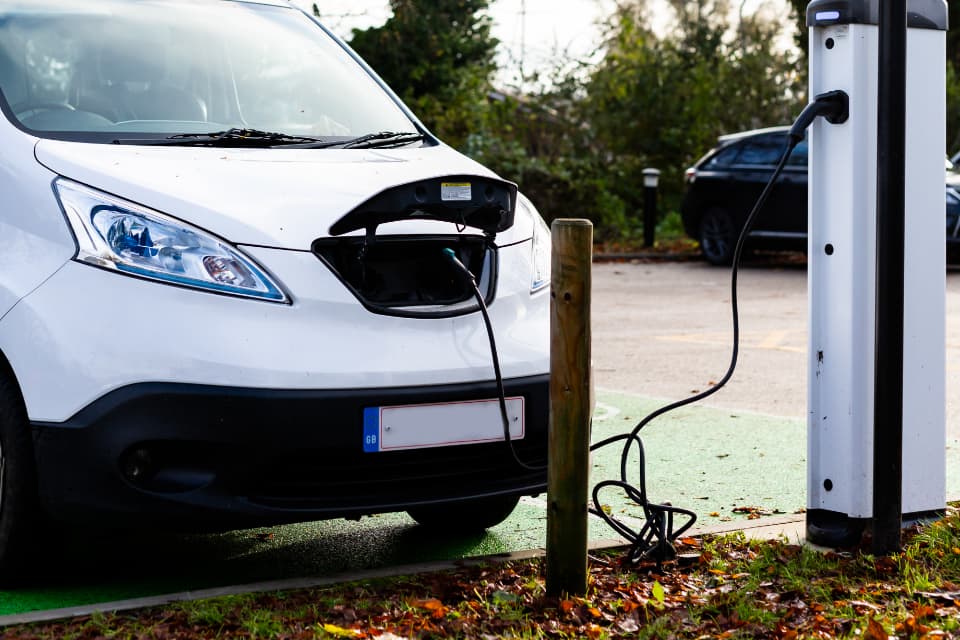
The same document lists grants in force at that date, which the Department names among "the government's schemes to lower the upfront and running costs of owning an EV": "the plug-in van grant of up to £2,500 for small vans and £5,000 for large vans until at least 2025 and £350 off the cost of homeplace chargepoints for people living in flats." These are dated grant terms from a January 2024 announcement; grant levels and deadlines have changed before and can change again, so anyone relying on them today should check the current terms rather than this document.
What the mandate required, and the industry statements around it
As announced, the mandate requires manufacturers to produce an annually rising percentage of new zero emission cars and vans up to 2030, reaching 80% of new cars and 70% of new vans sold in Great Britain by 2030 and 100% by 2035.
Announced alongside the quotas are commercial figures quoted in the document from named private parties: bp pulse's Akira Kirton stated plans "to invest £1 billion over 10 years" in charging hubs "by 2030", and Uber UK's Andrew Brem said London had "well over 10,000 electric vehicles on the platform in the capital". These are those companies' statements, carried in a government announcement. The document also lists manufacturer investments it attributes to Nissan, Tata, BMW, Ford and Stellantis, including "Nissan's recent investment of over £3 billion to develop 2 new electric vehicles at their Sunderland plant".
How to verify it yourself
Every claim in this article rests on one dated, named government document. To check it:
- Open the GOV.UK news story "Pathway for zero emission vehicle transition by 2035 becomes law" and confirm the publisher line (Department for Transport, Office for Zero Emission Vehicles) and the date, 3 January 2024.
- Quote-check the thresholds in the story's own sentence covering 80% of new cars and 70% of new vans in Great Britain by 2030, rising to 100% by 2035.
- For current grant and chargepoint figures, do not rely on the January 2024 numbers: look up the present GOV.UK guidance for electric vehicle grants and charging statistics, since these change.
- Compare any figure quoted here against the wording in the 3 January 2024 story itself, which carries the Department's statements in full.
Where any figure here differs from what a current official document says, the current document governs; the 3 January 2024 story fixes only what the Department said on that day.