Rules & rights · EU
One approval, all of Europe: how EU whole-vehicle type approval works, in the European Commission's own words
The European Commission's own explainer pages set out how EU whole-vehicle type approval (WVTA) works: a national authority certifies a vehicle type once, mutual recognition makes it valid across the EU, every produced car carries a certificate of conformity, and conformity-of-production and in-service checks continue after sale. This standing reference quotes the Commission's passages on the roles of type-approval authorities, technical services and market surveillance authorities, the Regulation (EU) 2018/858 framework that applies across the EU from 1 September 2020, and the proposed reform's €30,000-per-vehicle penalty provision. It applies to vehicles sold in the EU market.
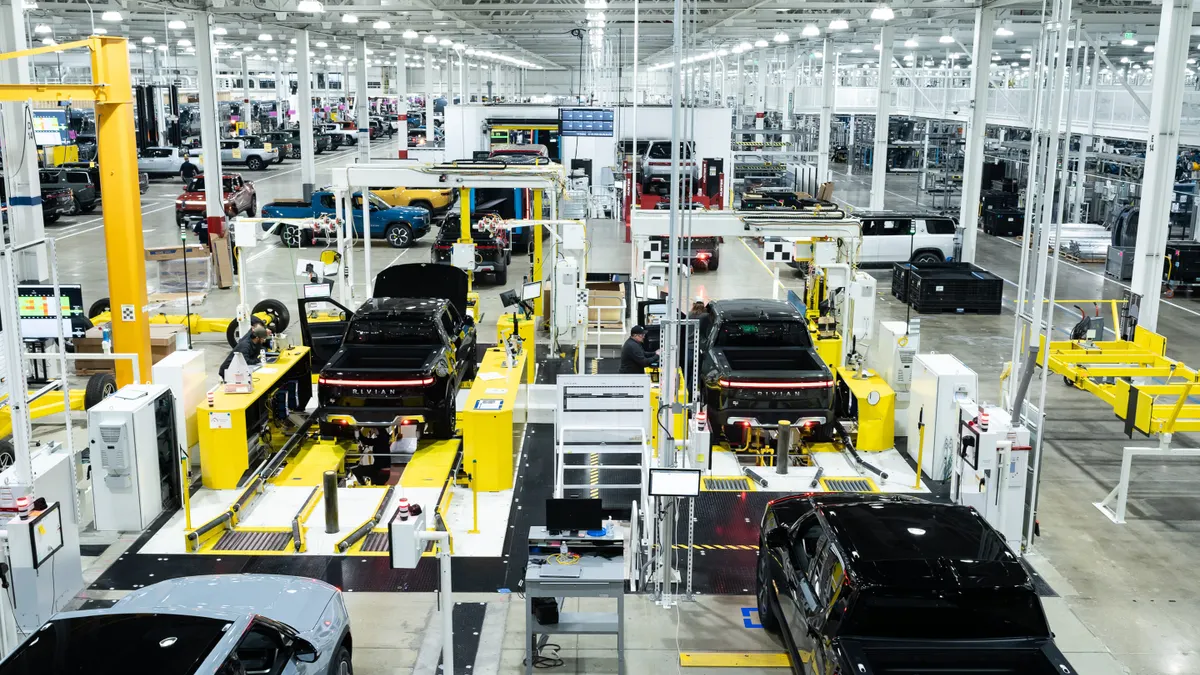
On video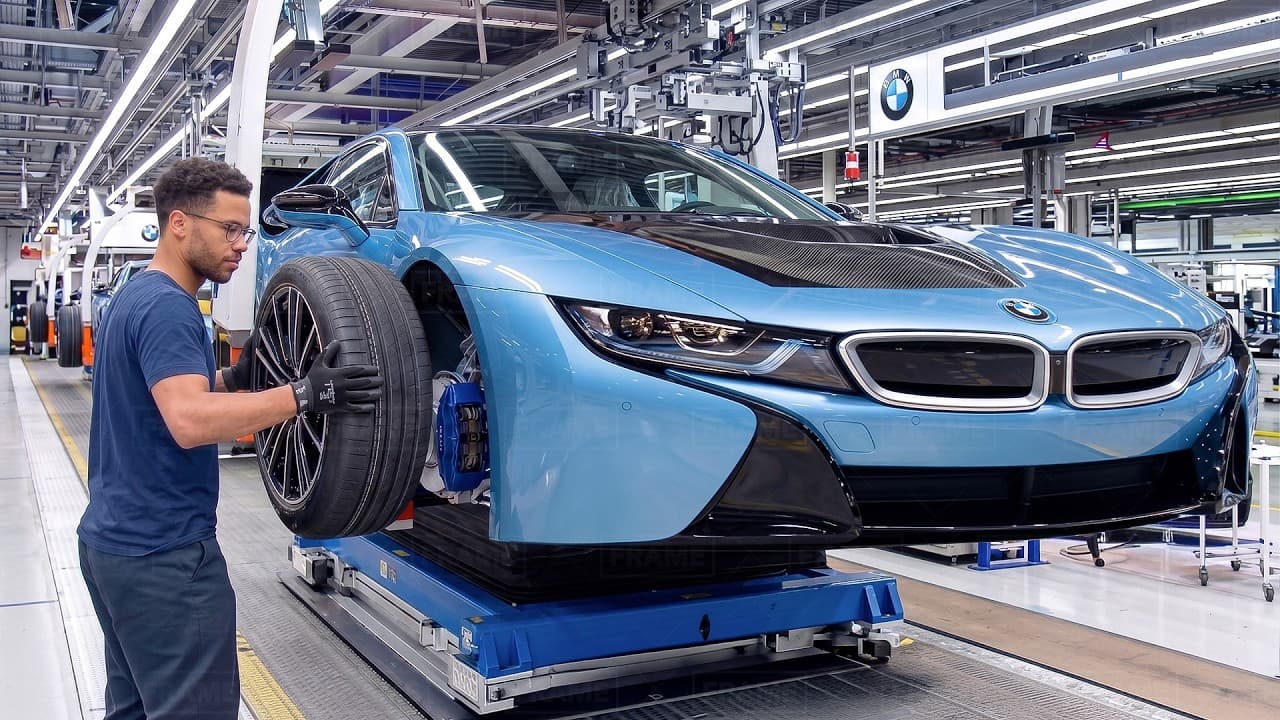 Building BMW's Most Advanced Supercar: BMW i8 Production LineFRAME · opens the player
The recording belongs to FRAME and plays from YouTube; opening it lets YouTube see the request. Watch on YouTube.
Before a new model can be sold anywhere in the European Union, it must go through EU whole-vehicle type approval — the WVTA system, a term the European Commission defines on its technical harmonization pages. The process is run by national authorities, and its effect is territorial: an approval granted in one EU country is accepted in all of them. Here is what the Commission's published pages say about the system.
The Commission's FAQ describes type approval as "the process applied by national authorities to certify that a model of a vehicle meets all EU safety, environmental and conformity of production requirements before authorising it to be placed on the EU market." The manufacturer supplies roughly a dozen or more pre-production prototypes equal to the final product, which are tested for compliance with EU safety rules — installation of lights, braking performance, stability control, crash tests with dummies — plus noise and emissions limits and production requirements for parts and components such as seats or steering wheel airbags. If the requirements are met, a national authority issues the EU vehicle type approval authorising sale of that vehicle type in the EU.
Certified once, accepted everywhere
The system rests on mutual recognition. As the FAQ puts it, "The system is based on the mutual recognition of approvals granted by Member States (certified once, accepted everywhere in the EU)." An approval of a vehicle type in one EU country is valid EU-wide without further tests and re-certification, though the overall type approval for a type is always delivered by one national authority; a manufacturer may also hold partial approvals in different Member States. The Commission's harmonization page states the same rule from the manufacturer's side: "a manufacturer can obtain certification for a vehicle type in one EU country and market it EU-wide without further tests."
The certificate of conformity
Once the type is approved, the paperwork follows the car into production and registration. "Every vehicle produced is then accompanied by a certificate of conformity, which is like the car's birth certificate, in which the manufacturer certifies that the vehicle corresponds to the approved type," the FAQ explains. "On the basis of this document, the vehicle can be registered anywhere in Europe." The harmonization page reinforces the binding effect: "EU countries cannot refuse to register vehicles if they are accompanied by a valid CoC that proves their compliance with EU law."

Who does the testing, and who polices the market
Three kinds of body appear in the system, and the Commission defines them distinctly. According to the FAQ:

- Type-approval authorities — national public authorities in charge of officially approving vehicles, such as KBA in Germany or RDW in the Netherlands
- Technical services — "the test bodies and laboratories that are specifically designated by the Member States’ type approval authorities to carry out the type approval tests in accordance with EU legislation"; in most Member States the authority has no in-house testing facilities, so it designates a technical service to test prototypes on its behalf, and the authority checks that the tests are done correctly
- Market surveillance authorities — national public authorities that "check that the products already available on the market are safe and not harmful to the environment and exactly the same as the samples offered for initial testing and approval"
The Commission notes that market surveillance authorities linked to vehicle compliance are in some cases the same body as the type-approval authority, and that in enforcement terms the split runs by stage: type-approval authorities perform the checks before a product is put on the market, while market surveillance authorities are responsible for products already on the market. National authorities, not the Commission, do "the policing on the ground" under the current framework.
The current legal framework: Regulation (EU) 2018/858
The framework as it stands is Regulation (EU) 2018/858 of 30 May 2018, "on the approval and market surveillance of motor vehicles and their trailers, and of systems, components and separate technical units intended for such vehicles," which per the Commission page "applies across the EU from 1 September 2020," amending Regulations (EC) No 715/2007 and (EC) No 595/2009 and repealing Directive 2007/46/EC. According to the Commission, the Regulation "makes vehicle testing more independent and increases surveillance of cars already in circulation": it improves the quality and independence of vehicle type-approval and testing, increases checks of cars already on the EU market, and strengthens the system with greater European oversight.
(For orientation: the same FAQ traces the older base framework to Directive 2007/46/EC, which "provides a common legal framework for the type approval of cars, vans, trucks, buses and coaches," alongside Regulation (EC) No 715/2007 for the Euro 5 and 6 emissions rules — Euro 6 limits have applied to all new cars from September 2015, per the FAQ.)
Checks after approval
Approval is not the end of it. "Vehicles are subject to checks on the conformity of production and also to measures to ensure in-service conformity," the FAQ states. "Conformity of production tests are carried out on samples of freshly produced vehicles and ensure that their emissions values are in line with the ones measured on the prototype vehicles at type approval. In-service conformity tests are carried out on vehicles that have been in use for a certain number of kilometres or years, to ensure that they still have a pollution performance that is within the limits." The procedure for both is the same laboratory test used at type approval.
Penalties: today, and under the proposed reform
Under the current system, per the FAQ, "only the Member State that has type approved a vehicle can impose penalties for breach of the type approval procedure." Article 30(1) of Directive 2007/46/EC required a Member State that finds non-conforming new vehicles to take necessary measures — including, where necessary, withdrawal of the type approval — to bring production into conformity with the approved type.
The Commission's proposed reform, as described in the same FAQ, would go further: the Commission "would empower... to impose penalties in case of non-compliance." Car manufacturers in breach of type-approval legislation "(e.g. defeat devices or fake declarations) would risk administrative fines of up to €30,000 per vehicle which can be levied by the Commission if no fine is being imposed by the Member State." Per the same source, fines can also be imposed on technical services if they fail to carry out the tests rigorously, Member States would report their imposed penalties to the Commission every year, and national type-approval authorities would be subject to peer reviews. Whether proposed at the time of the FAQ's wording, this scheme is the Commission's own presentation — check the current legislative position before relying on it.
Why the reform was proposed
The Commission links the reform effort to enforcement weaknesses identified before the diesel emissions scandal: "A 'fitness check' of the current framework in 2013 concluded that differences in the interpretation and application of the rules by national type approval authorities and technical services could undermine the effectiveness of the system across Member States, highlighting the need for more efficient enforcement." The Commission was finalising its legislative proposal when the emissions-manipulation revelations emerged, and concluded that more far-reaching reform was needed. It also frames the new rules alongside consumer-remedy initiatives: in a Dieselgate-type scenario, victims of unfair commercial practices could obtain remedies collectively through a representative action.
The resources behind this piece are public: the two Commission pages quoted here — the FAQ on type approval of vehicles and the technical harmonization page — are published on single-market-economy.ec.europa.eu, and the Commission points to published lists of approval authorities, market surveillance authorities and designated technical services for each EU country. If you are registering or importing a car, ask the seller for the certificate of conformity; a Member State cannot refuse registration of a vehicle accompanied by a valid CoC proving compliance with EU law. Because these are Commission web pages that can be updated at any time, treat their wording as current when read, not as a permanent record — and for the legal text itself, Regulation (EU) 2018/858 is the document named as applicable since 1 September 2020.