Rules & rights · US
The EPA smog rating, on paper: how 10 to 1 maps to Tier 3 and CARB LEV III, model year by model year
EPA's Green Vehicle Guide assigns every US light-duty vehicle a smog rating from 10 (cleanest) to 1 based on tailpipe emissions. We walk through what the rating measures, how vehicles are tested before sale, and the full rating scales from MY2008 to MY2025 — including why a MY2018 score of 3 is about the same as a MY2017 score of 6.
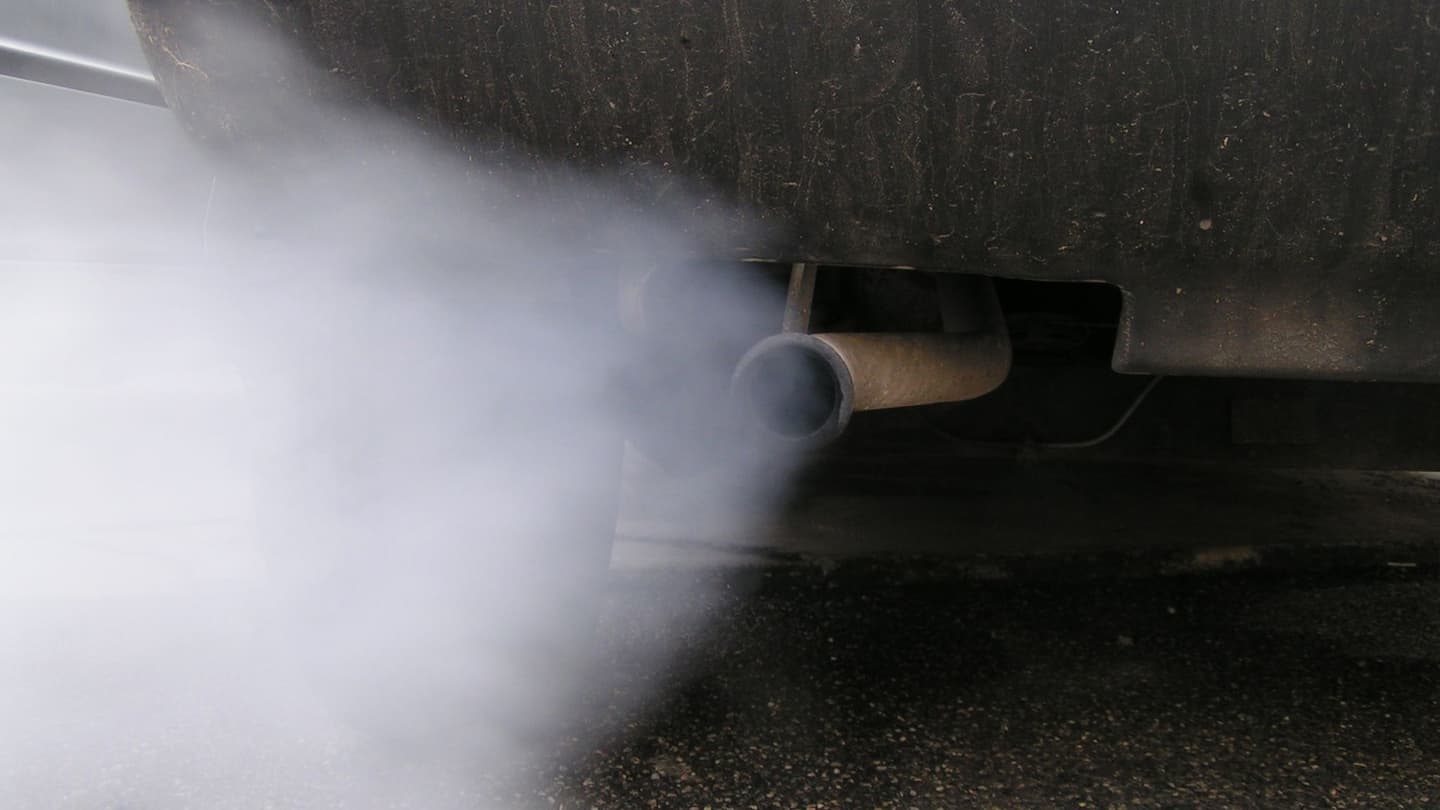
Every new light-duty vehicle sold in the United States carries a smog rating from the EPA's Green Vehicle Guide: a score of 10 for the cleanest tailpipe emissions down to 1 for the dirtiest. The rating reflects exhaust pollutants that contribute to local and regional air pollution — smog, haze and health problems — rather than carbon dioxide, which is handled by a separate greenhouse gas score.
The scale is not a single fixed standard. Light-duty cars and trucks must meet either the federal EPA emission requirements or California's CARB requirements, and individual states choose which of the two applies to vehicles sold there. Within both systems, automakers can pick from a range of eligible emission standards for each vehicle, so two vehicles with the same smog rating may have been certified against different standards.
What the rating measures, and how it is produced
Before a new vehicle model can be sold, sample vehicles are tested under tightly controlled conditions, with tailpipe emissions captured and measured; the results determine which emission standard the vehicle meets. The standards cover the major pollutants in vehicle exhaust:
- NMOG, NMHC, or THC — types of carbon-containing compounds, including hydrocarbons
- NOx — Oxides of Nitrogen, which combine with hydrocarbons to create smog
- PM — Particulate Matter, tiny particles of solid matter that lodge in the lungs and deposit on buildings
- CO — Carbon Monoxide, a colorless, odorless, poisonous gas
- HCHO — Formaldehyde, a lung irritant and carcinogen
Why scores dropped after MY2017 — and why that is not what it looks like
Starting with model year 2018, the smog rating chart was recalibrated to reflect the new, more stringent Tier 3 emission standards. EPA describes this as making better use of the entire scale and allowing more useful comparisons between vehicles. The practical effect is that the same number no longer means the same thing across the model-year boundary: a MY2018 and later smog rating of 3 is about the same as a MY2017 rating of 6. As EPA puts it, even though ratings appear to be going down, vehicles are not getting dirtier.
The scales, model year by model year
EPA publishes a separate rating chart for each model-year group, mapping each smog score to the federal Tier 2 or Tier 3 bin and the CARB LEV II or LEV III standard it corresponds to. The MY2025 chart, which EPA annotates as reflecting full implementation of the federal and California standards, runs:
- Rating 10 — EPA Tier 3 Bin 0 / CARB LEV III ZEV
- Rating 7 — EPA Tier 3 Bin 20 / CARB LEV III SULEV20
- Rating 6 — EPA Tier 3 Bin 30 / CARB LEV III SULEV30
- Rating 5 — EPA Tier 3 Bin 50 / CARB LEV III ULEV50
- Rating 4 — EPA Tier 3 Bin 70 / CARB LEV III ULEV70
- Rating 2 — EPA Tier 3 Bin 125 / CARB LEV III ULEV125
- Rating 1 — EPA Tier 3 Bin 160 / CARB LEV III LEV160
- Ratings 9, 8 and 3 — no corresponding bin listed on the MY2025 chart
For MY2018 through MY2024, the chart carries both the outgoing Tier 2 bins and the new Tier 3 bins: a rating of 10 corresponds to Tier 2 Bin 1 or Tier 3 Bin 0 (ZEV in California), a rating of 7 to Tier 2 Bin 2 or Tier 3 Bin 30 (SULEV30), a rating of 5 to Tier 2 Bin 3 or Tier 3 Bin 70 (SULEV70), a rating of 3 to Tier 2 Bin 4 or Tier 3 Bin 125 (SULEV125), and a rating of 1 to Tier 2 Bin 5-8 or Tier 3 Bin 160 (SULEV160). Ratings 9, 4 and 2 have no listed corresponding standard in that window.
Further back, the charts lean on the earlier standards. On the MY2016 and 2017 chart, which still lists Tier 2, Tier 3, CARB LEV II and CARB LEV III side by side, a rating of 9 requires Tier 2 Bin 2 with the added certification to California PZEV noted in the chart's footnote, and a rating of 5 maps to Tier 2 Bin 5, Tier 3 Bin 160, CARB LEV II or LEV160; at the bottom of that chart, rating 3 is Tier 2 Bin 7 and rating 1 falls to large-truck ULEV and LEV II entries with no bin listed.
The earlier charts drop the Tier 3 column and are each slightly different. On the MY2014 and 2015 chart, ratings 9 through 5 run from Bin 2 (PZEV) to Bin 5 (LEV II/LEV160), rating 3 is Tier 2 Bin 7, rating 2 is Bin 8 with SULEV II large trucks on the CARB side, and the lowest rating of 1 is a large-truck ULEV and LEV II entry with no bin listed. On the MY2013, 2012 and 2011 chart, ratings run from Tier 2 Bin 1 (CARB ZEV) at 10 down the same ladder to Bin 8 and the large-truck entries at 2 and 1. The MY2010 and 2009 chart shifts the ladder down one step: rating 10 is Bin 1 (ZEV), rating 3 is Bin 8 with SULEV II large trucks, and ratings 2 and 1 are large-truck ULEV and LEV II entries with no bin listed. On the MY2008 and earlier chart, rating 2 is Tier 2 Bin 9 with large-truck ULEV, rating 1 is Bin 10 with large-truck LEV II, and the lowest rating of 0 corresponds to Tier 2 Bin 11.
How to check a vehicle's rating yourself
EPA's Green Vehicle Guide smog-rating page carries the full rating charts by model year and was last updated on March 30, 2026; the charts are subject to revision, so treat them as current as of that date. To verify a specific vehicle, match its model year to the correct chart, confirm whether it was certified to the federal or California standard, and note that the pollutant emission levels for each standard are published separately in EPA's light-duty emission standards document (EPA-420-B-19-043, September 2019) and in CARB's LEV III exhaust emission standards.