Rules & rights · US
How a nonconforming car can legally enter the US: the Part 593 eligibility list and the HS-7 boxes
A rules-and-rights explainer for the US market: how NHTSA decides which vehicles not built to US safety standards may be imported, how the annual Appendix A list under 49 CFR Part 593 works, and which HS-7 declaration box applies at entry.
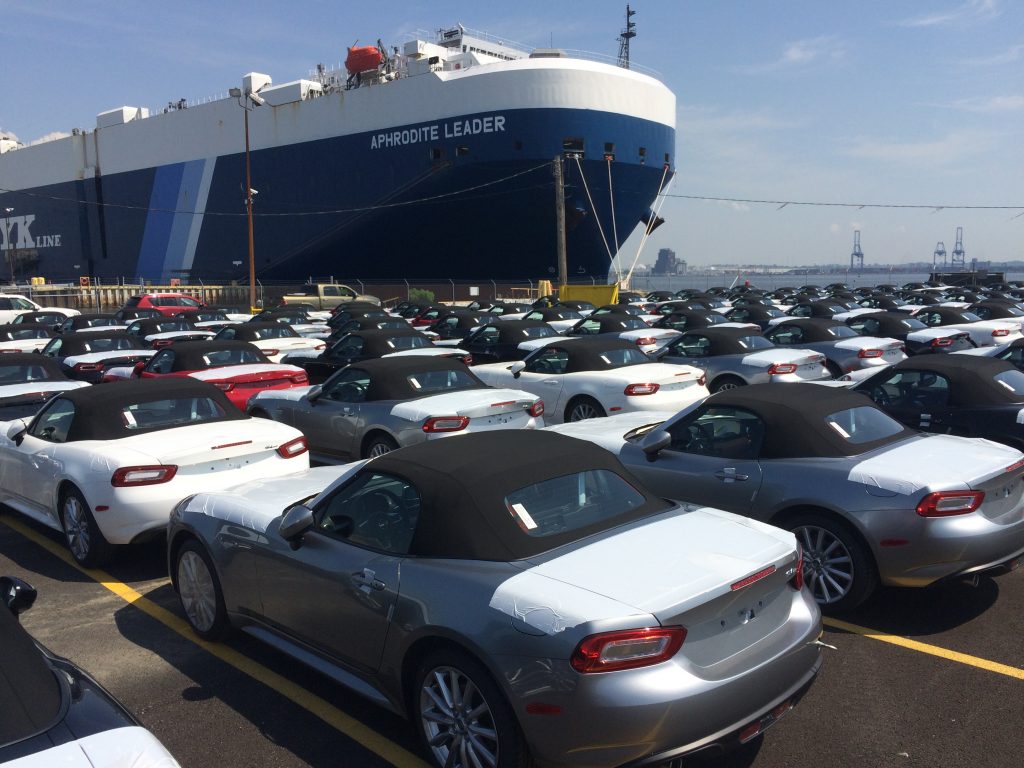
On video Picking Up Two Imported Land Rover Defenders at Baltimore Port | Hannibal + PumbaaLekker Defenders · opens the player
The recording belongs to Lekker Defenders and plays from YouTube; opening it lets YouTube see the request. Watch on YouTube.
Cars built for markets other than the United States generally do not conform to the Federal Motor Vehicle Safety Standards (FMVSS), and under 49 U.S.C. 30112(a)(1) such vehicles are barred from entry. There are exceptions, and they run through two federal documents: NHTSA's annual list of vehicles decided eligible for importation, published in Appendix A to 49 CFR Part 593, and the HS-7 Declaration Form every importer must file at entry. NHTSA is required by statute to publish the eligibility list annually in the Federal Register.
The statutory test for eligibility
Under 49 U.S.C. 30141(a)(1)(A), a vehicle not originally manufactured to conform to all applicable FMVSS is refused admission unless NHTSA decides it is substantially similar to a US-certified vehicle of the same model year and can be readily altered to conform. Where no substantially similar US-certified vehicle exists, 49 U.S.C. 30141(a)(1)(B) allows admission if the safety features comply with, or can be altered to comply with, all applicable FMVSS, based on destructive test data or other evidence the Secretary of Transportation finds adequate. Eligibility decisions can be made on NHTSA's own initiative or on petition.
Reading the Appendix A list
Each vehicle on the list carries a vehicle eligibility number, which the importer must enter on the HS-7 Declaration Form accompanying entry. Two prefixes distinguish how the decision arose: VSA numbers cover vehicles NHTSA decided eligible on the Administrator's own initiative, while VSP numbers cover decisions made on a petition from a manufacturer or registered importer. The list carries conventions for reading it - hyphens in model years mean "through," MC means motorcycle, SWB and LWB mean short and long wheel base, and for European vehicles the model year ordinarily means the calendar year of production. Vehicles more than 25 years old are removed from the list, because they need not comply with all applicable FMVSS to be lawfully imported.
The HS-7 declaration: which box applies
The HS-7 form is the declaration required at entry; under 49 CFR part 591 no person may import a motor vehicle or regulated item of equipment without filing one. The main boxes for a nonconforming car are:
- Box 1 covers vehicles at least 25 years old, which may be imported without regard to FMVSS compliance; NHTSA estimated about 2,200,000 Box 1 entries per year for the three years following its 2022 notice.
- Box 2B covers conforming Canadian-market vehicles imported for personal use - NHTSA estimated around 2,600 such importers per year.
- Box 3 covers nonconforming vehicles imported by registered importers (RIs); NHTSA estimated an average of 300,120 entries per year, roughly 300,000 of them Canadian-market vehicles and 120 for other foreign markets. Box 3 entries involve an HS-474 conformance bond and a conformity package.
- Box 7 covers temporary importation of nonconforming vehicles for research, investigations, demonstrations, training or competitive racing events, which requires written permission from NHTSA unless the importer is a manufacturer of motor vehicles certified to the FMVSS.
- Box 10 covers show or display: with written permission, NHTSA may exempt vehicles it deems to have sufficient technological or historical significance.
- Box 8 covers off-road vehicles not primarily manufactured for public roads, which are not "motor vehicles" subject to the FMVSS prohibition.
What a registered importer does
A nonconforming vehicle under Box 3 must be imported through a registered importer, who is registered with NHTSA and subject to information requirements: an application process, annual reporting for existing RIs, notification of business changes, and recordkeeping requirements. NHTSA's 2022 notice counted 121 RIs then registered to import nonconforming vehicles under Boxes 3 and 13. Box 3 entries also involve the HS-474 conformance bond, a conformity package and, where needed, an import eligibility petition.
Checking the current status of a specific car
The 2017 Federal Register document is one annual edition of Appendix A, and the list is revised each year. Before any purchase or shipment, a buyer should check the current Appendix A to 49 CFR Part 593 for the vehicle's make, model and model year and its eligibility number; confirm on NHTSA's site which RIs are currently registered; and read the HS-7 instructions for the box that fits the entry. Entry-volume estimates cited here are the agency's figures from its July 13, 2022 notice and change as NHTSA updates them.
From the source
- Federal Register :: Agency Information Collection Activities; Notice and Request for Comment; Importation of Vehicles and Equipment Subject to the Federal Motor Vehicle Safety, Bumper, and Theft Prevention Standards
- Federal Register :: List of Nonconforming Vehicles Decided To Be Eligible for Importation