Rules & rights · US
Crash test dummies on paper: what 49 CFR Part 572 actually specifies, from the ES-2re and Q3s to the proposed THOR-50M
Before a crash test dummy can be used in a US compliance test or a 5-Star Safety Ratings run, its design, qualification tests and response ranges have to be written down in federal regulation. We walk through how NHTSA's 49 CFR Part 572 defines its crash test dummies, using three Federal Register documents: the 2008 final rule on the ES-2re side impact dummy, the 2021 final rule adding the Q3s 3-year-old child dummy, and the 2023 proposal to add the THOR-50M frontal dummy.
On video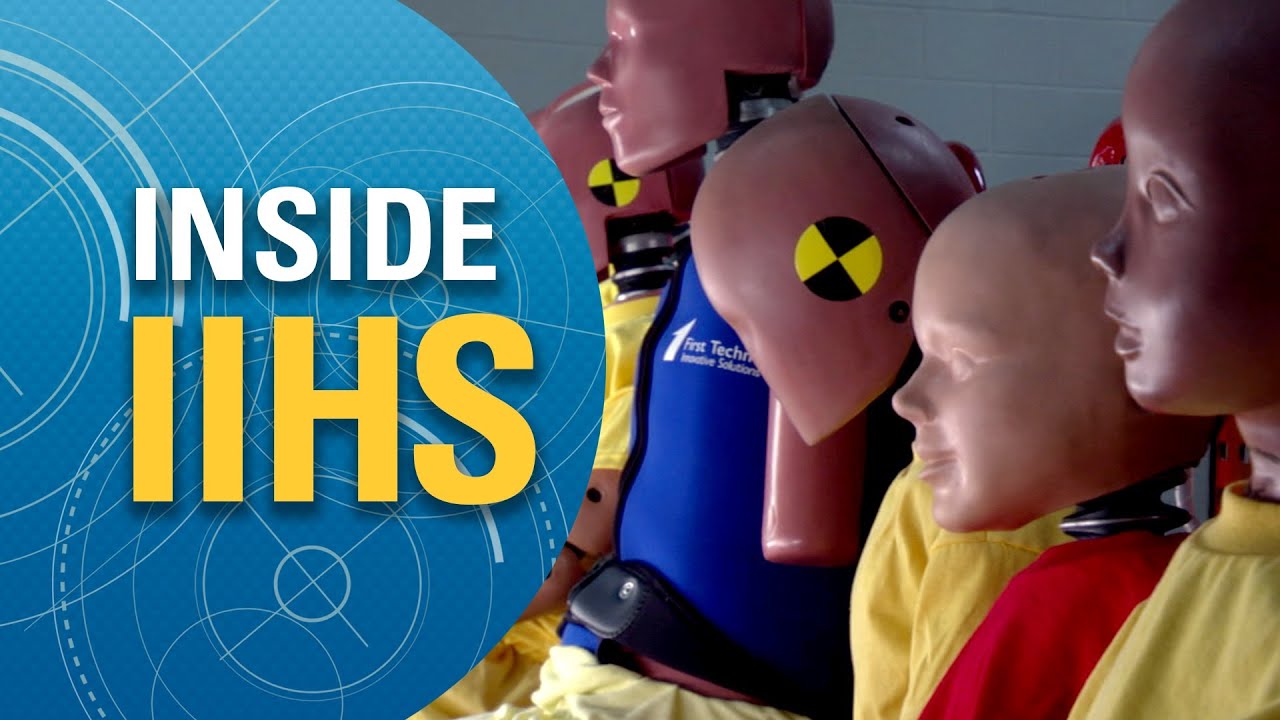 Inside IIHS: Crash test dummies at workIIHS · opens the player
The recording belongs to IIHS and plays from YouTube; opening it lets YouTube see the request. Watch on YouTube.
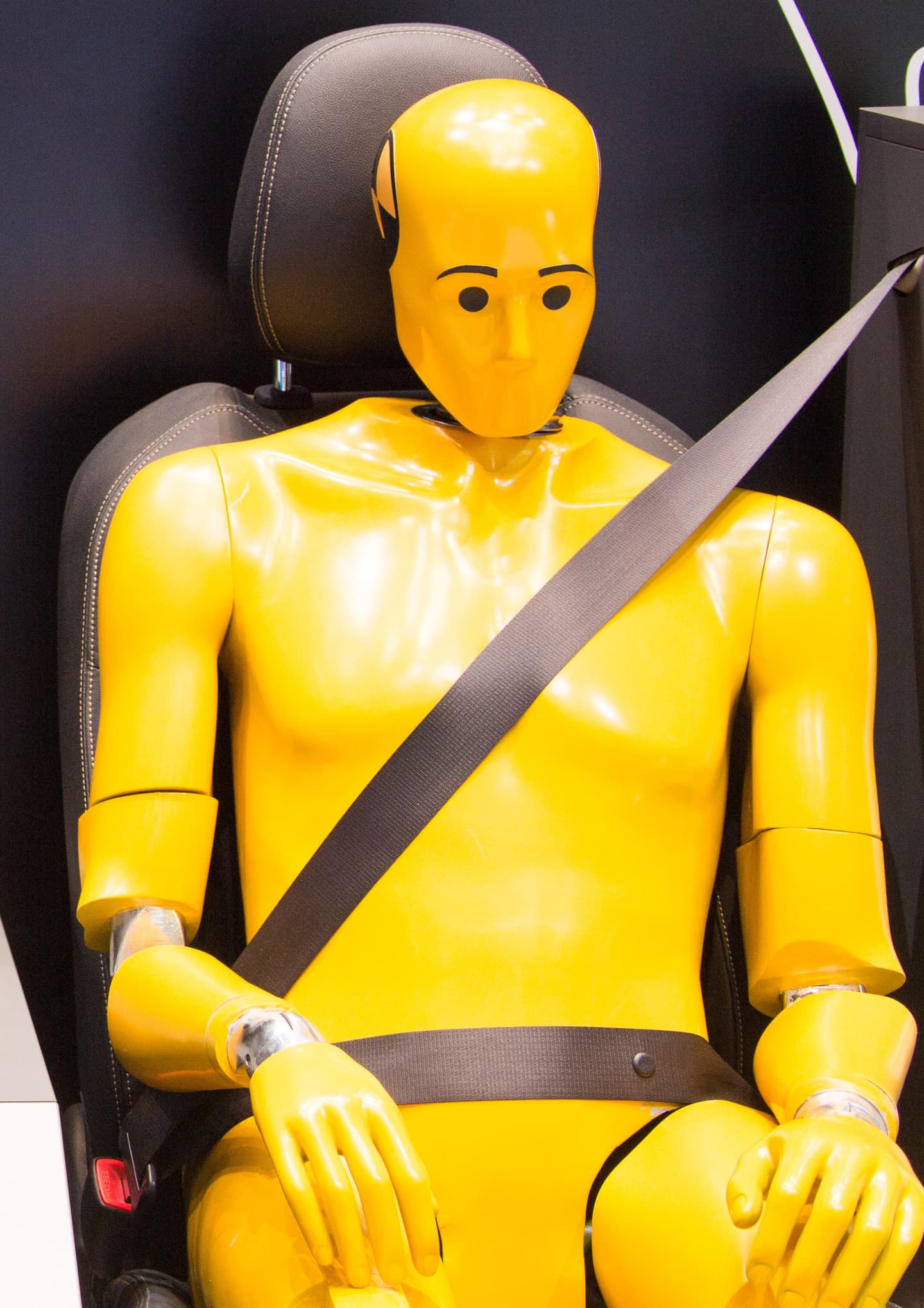
Crash test dummies look like mannequins, but in regulation they are instruments. NHTSA calls them anthropomorphic test devices (ATDs), and the agency's proposal to add a new frontal dummy to its regulations describes them plainly: they "simulate the response of a human occupant in a crash and measure the effects of the crash forces on the occupant." Each type of dummy is designed for use in specific types of crashes — frontal and side are the examples the proposal gives — and instrumented with sensors whose readings are used to assess the potential for injury.
The dummies themselves live in 49 CFR Part 572, titled Anthropomorphic Test Devices. A dummy becomes usable in US compliance and rating work when NHTSA adds its design and performance specifications to that part through a rulemaking, incorporating a technical data package — engineering drawings, a parts list and procedures — by reference. The agency's stated aim for its latest proposal is that Part 572 "will help provide a suitable, standardized, and objective test tool for the safety community."
Which dummy goes in which test
For frontal impacts, the 50th percentile male dummy defined in Part 572 was, as of the September 2023 proposal, the Hybrid III-50M, which NHTSA added in 1986. Per that proposal, it is the dummy NHTSA uses for compliance testing against FMVSS No. 208, "Occupant crash protection," and for rating vehicles under NCAP, the program behind the agency's 5-Star Safety Ratings. The frontal test conditions include a run in which "the dummy is belted and the test vehicle, traveling up to 35 mph, impacts a rigid barrier at a ninety-degree angle or perpendicular," plus an unbelted test at 20-25 mph into a barrier angled ±30 degrees oblique from perpendicular. NCAP also runs a 35 mph frontal test with a belted HIII-50M.
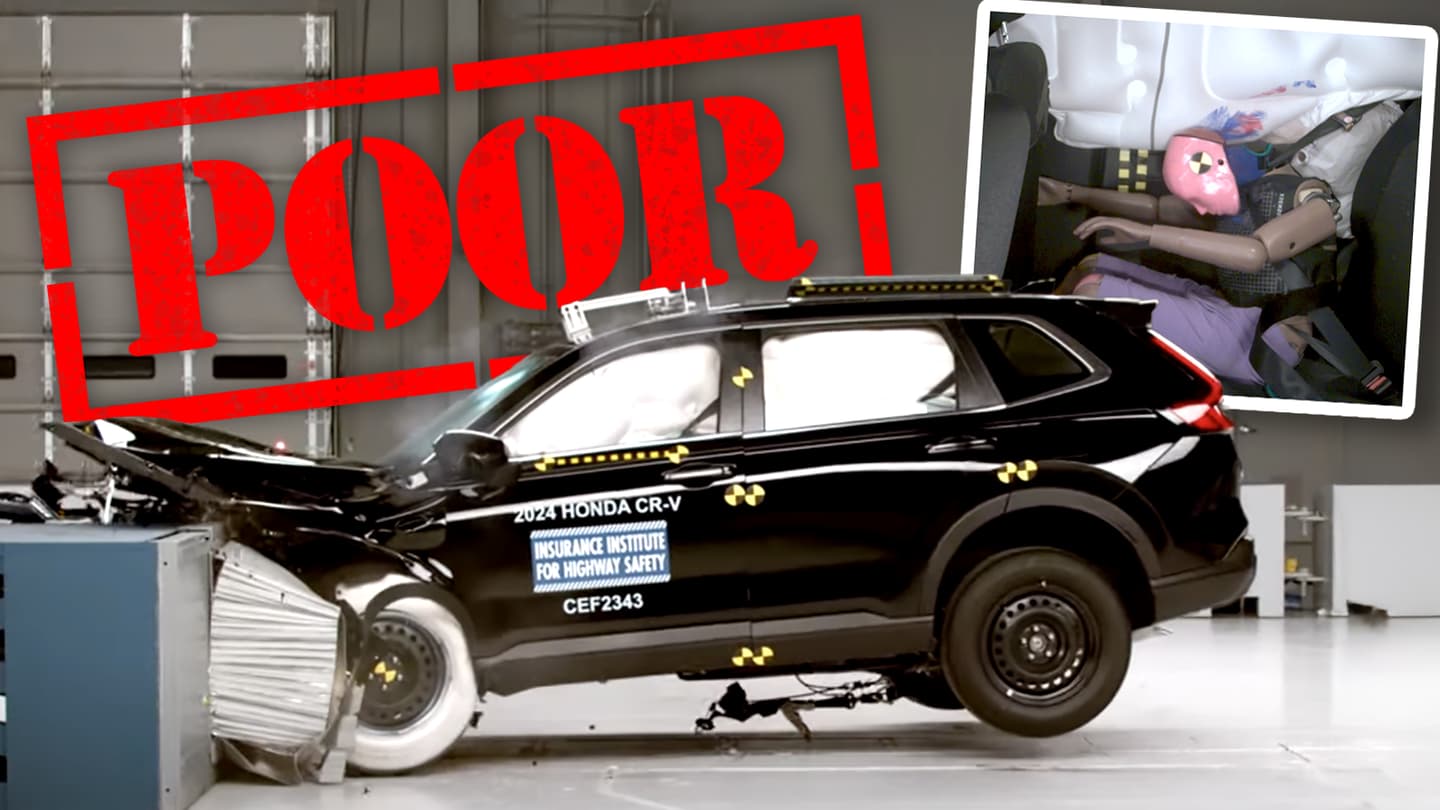
On the side impact side, the ES-2re — a mid-size adult male dummy added to Part 572 by a December 2006 final rule — was, per the June 2008 response to petitions, specified for the FMVSS No. 214 pole test, in which "a vehicle is propelled sideways into a rigid pole at an angle of 75 degrees, at any speed up to 32 km/h (20 mph)." Compliance in that test was to be checked with two dummies, the ES-2re and one representing small adult females, and the same rule also specified the dummies for FMVSS No. 214's moving deformable barrier test, which simulates a vehicle-to-vehicle, "T-bone" type intersection crash.
Children get their own dummies. The Q3s, added by a November 3, 2020 final rule, is "an instrumented dummy that can assess the performance of child restraint systems in protecting small children in side impacts." In the Federal Register hierarchy it sits in its own subpart — Subpart W, Q3s Three-Year-Old Child Test Dummy — reflecting the pattern in which each dummy in Part 572 has a dedicated subpart of specifications.
How a dummy earns its place in the regulation
A dummy is only useful if identical units behave identically at different laboratories. The 2008 ES-2re rule puts it this way: "For any test dummy to be a useful test device in a compliance or vehicle rating setting, responses to controlled inputs must be reproducible and repeatable." Part 572 achieves that through a qualification process — a series of specified component and whole-body tests that verify a dummy's response measurements fall within prescribed ranges — plus the incorporated drawings, parts list and assembly and inspection procedures. For the Q3s, NHTSA noted that dummies built to the qualification requirements and the technical data package "will be uniform in their" design, so that a dummy qualified in one lab matches one qualified in another.
The ES-2re qualification shows how granular this gets. For the thorax alone, two procedures are specified: an individual rib drop test, in which each rib module is mounted in a fixture and a guided mass is dropped from two heights onto the rib, with the resulting deflection measured; and a full-body test on a seated dummy with its complete set of ribs, struck on the side at the centerline of the middle thorax region. NHTSA denied a petition to eliminate the full-body test, reasoning it "is necessary to assess the dummy's thorax performance as a system, as opposed to assessing the performance of each rib individually in the rib drop test."
For the THOR-50M proposal, NHTSA lays out proposed qualification tests for the head, face, neck, upper thorax, lower thorax, abdomen, upper leg, knee, and lower leg. Some body regions get a single test condition; others, such as the neck, get a series of them. Each condition consists of test procedures, test parameters, and acceptance intervals — the detailed steps, the physical quantities, and the ranges a passing dummy must fall within.
A rulebook with no obligations attached
One counterintuitive feature of Part 572 is that adding a dummy to it obliges nobody to do anything. As NHTSA put it in the Q3s final rule: "Specifications in part 572 do not impose any requirements on anyone. Businesses are affected only if they choose to manufacture or test with the dummy." The requirements attach where a separate standard or program references the dummy — it is FMVSS No. 208, FMVSS No. 214 and NCAP that call a particular dummy into a particular test, not Part 572 itself.
Dummy specifications have been amended in response to petitions. The Q3s final rule of November 22, 2021 was itself a response to a petition for reconsideration from the dummy manufacturer Humanetics, which asked for corrections "to hole dimensions and tolerances in a few of the drawings of parts in the dummy torso, because they are in error." NHTSA granted the petition and revised the drawing package, parts list, and procedures manual. The 2008 ES-2re document likewise answered petitions from the Alliance of Automobile Manufacturers and others, with NHTSA granting some points and denying others — including the petition to eliminate the full-body thorax test. The Alliance had also asked NHTSA to eliminate the thorax individual rib drop test and to reduce the speed for the full body thorax test.
What comes next: the THOR-50M proposal
The newest chapter is a notice of proposed rulemaking published September 7, 2023, proposing to amend Part 572 to include the Test Device for Human Occupant Restraint (THOR) 50th percentile adult male — "a test dummy designed for use in frontal crash tests" with, in NHTSA's description, several advanced capabilities and advantages over the Hybrid III 50th percentile male. NHTSA stress-tested the proposal: nine vehicle crash tests with two THOR-50M units found "no signs of damage beyond normal wear and tear, and there were no sensor failures that were critical to the calculation of injury risk," and elevated-energy sled and oblique test series fed into the durability and usability analysis. A supplemental notice of proposed rulemaking followed on July 9, 2024, meaning the rule was still in the proposal stage as of the most recent document in this sequence.
How to read the numbers a dummy produces
The point of all this instrumentation is producing injury criteria against fixed reference values. FMVSS No. 208 "regulates vehicle performance in these crash tests by specifying injury criteria and associated injury assessment reference values (IARVs)." One example NHTSA gives: the standard specifies a maximum calculated HIC15 value of 700 for the HIII-50M, while the average HIC15 measurement from a set of 29 vehicle crash tests in either the full frontal rigid barrier or oblique modes was 285. The same proposal illustrates how a dummy's qualification levels are calibrated to the crashes it will see — for head and face impact qualification tests, the head impact test produced an average HIC15 of 157, while the face impact averaged around 450, making the face test the more severe assessment of head response.
If you want to check any of this, the three documents discussed here — the ES-2re final rule of June 16, 2008 (73 FR 33903), the Q3s final rule of November 22, 2021 (86 FR 66214) and the THOR-50M NPRM of September 7, 2023 — are readable in full on FederalRegister.gov under their docket numbers, and the current text of 49 CFR Part 572, including each dummy's subpart and qualification procedures, is on eCFR.gov. NHTSA also publishes its NCAP test results and the 5-Star Safety Ratings at nhtsa.gov, where you can see which vehicles were tested with which dummies.