Files · US
Where Toyota builds what: the company's own plant list, from Toyota City to North Carolina
A standing reference on Toyota's manufacturing footprint, compiled from Toyota's own facilities pages: start-of-production dates and main products for each Japanese plant and 100% subsidiary, plus the Canadian, US and Mexican plants under Toyota Motor North America. Dates carry the manufacturer's snapshot of August 4, 2026 for Japan and May 8, 2026 for North America; the lists can and do change.
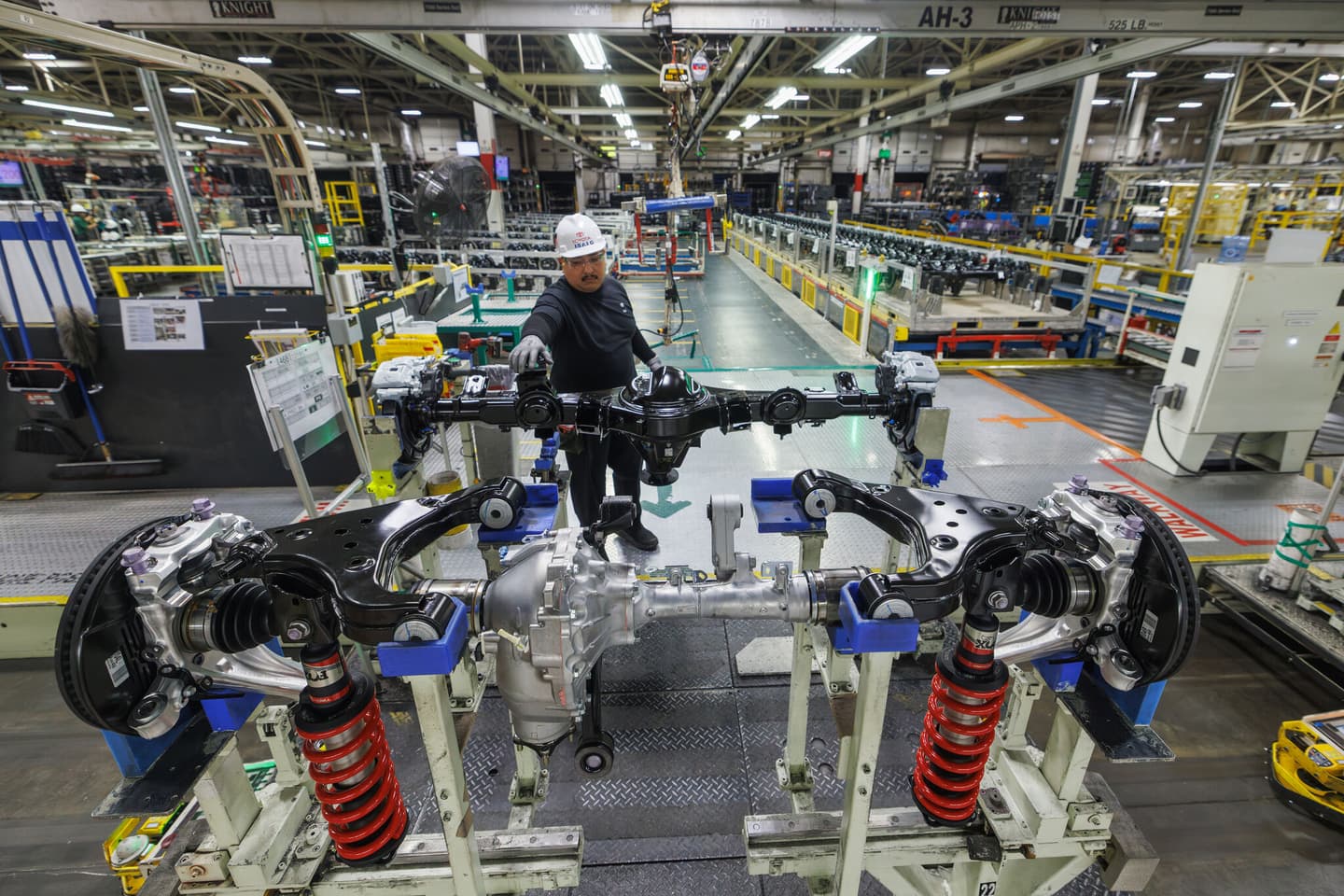
Toyota publishes its own map of where it builds cars: a facilities list on its global website with the plant name, main products and the month each plant started operating. Read in October 2026, the Japan page carries the date August 4, 2026 and the North America page May 8, 2026, so every entry below reflects what the company published as of those dates. Toyota updates these pages, and products move between plants, so the lists should be treated as snapshots rather than permanent facts.
This file reports only the manufacturer's own published tables. It contains no production volumes, no visits to any plant and no verdicts on the output - just the locations, products and dates Toyota lists for Japan and North America, its two home regions in this listing.
Japan: the parent plants, dated to the month
Toyota's Japanese operations begin, in list order and in history, at the Honsha Plant, making forged-metal parts, hybrid-system parts, fuel-cell system parts and chassis parts, with a start of production in November 1938. Motomachi followed in August 1959 and lists the Crown Sedan, Crown Crossover, Mirai, Century sedan, bZ4X, GR Yaris, GR Corolla, LC, RZ and LBX. Takaoka, from September 1966, lists the RAV4, Harrier, bZ4X and Toyota C-HR+; Tsutsumi, from December 1970, lists the Crown Crossover, Crown Sport, Crown Estate, Corolla in three body styles, Prius and Camry.
Tahara, from January 1979, is the listed home of the Land Cruiser 250, 4Runner, GX, LS, IS, LM, Century and engines, a product list that spans SUVs, sedans and engines. The remaining parent plants are mostly parts and engines: Kamigo (engines, November 1965), Miyoshi (powertrain-related, forged-metal and engine-related parts, July 1968), Myochi (powertrain and resin parts, June 1973), Shimoyama (engines and fuel-cell tanks, March 1975), Kinu-ura (powertrain-related parts, August 1978) and Teiho (mechanical equipment and moldings, February 1986).
The Japanese 100% subsidiaries
The page marks six companies with an asterisk as 100% subsidiaries of Toyota Motor Corporation, and their product lists read like a tour of the lineup. Toyota Motor Kyushu (from December 1992) builds the ES, UX, NX, RX, engines and hybrid-system parts; Toyota Motor Hokkaido (October 1992) builds transmissions, powertrain-related parts and forged-metal parts; Toyota Motor East Japan (July 2012) builds the Aqua, Sienta, JPN Taxi, Yaris, Yaris Cross, Corolla Cross, LBX, engines and powertrain- and brake-related parts. Toyota Motor Hamura is the newest entry, from April 2026, building the Land Cruiser 250 and Dyna.
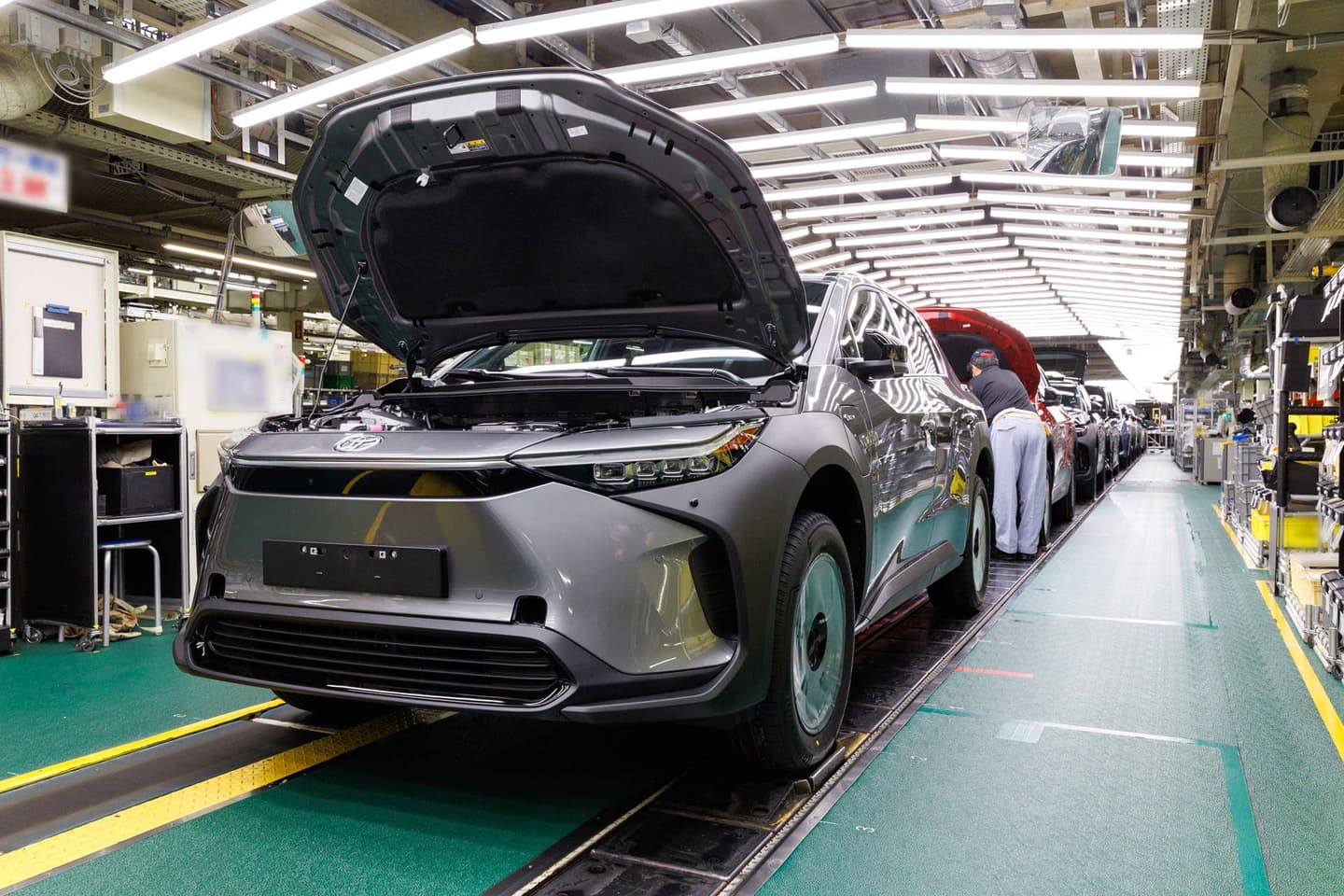
Two subsidiaries carry the oldest dates on the page: Toyota Auto Body, listed from August 1945, builds the Noah, Voxy, Hiace, Alphard, Vellfire, Land Cruiser 300, Land Cruiser 70, Coaster, LX and ambulances; Daihatsu, listed from March 1907, builds the Roomy, Probox, Raize, Pixis epoch, truck and van, the Copen GR Sport and engines.
North America: Canada, the US and Mexico
Under Toyota Motor North America, the Canadian entry is Toyota Motor Manufacturing Canada Inc. (TMMC), producing the RX, RAV4 and NX (including HEV versions) since November 1988. In the US, the oldest entry is TABC in November 1972, making catalytic converters, weld sub-assemblies, steering columns and stamped parts, followed by the Kentucky plant (TMMK, May 1988) building the RAV4 HEV and Camry HEV plus engines, hydrogen fuel cell kits and powertrain-related parts, and the Bodine aluminum-casting plants, listed as TMMMO in Missouri and TMMTN in Tennessee from January 1993.
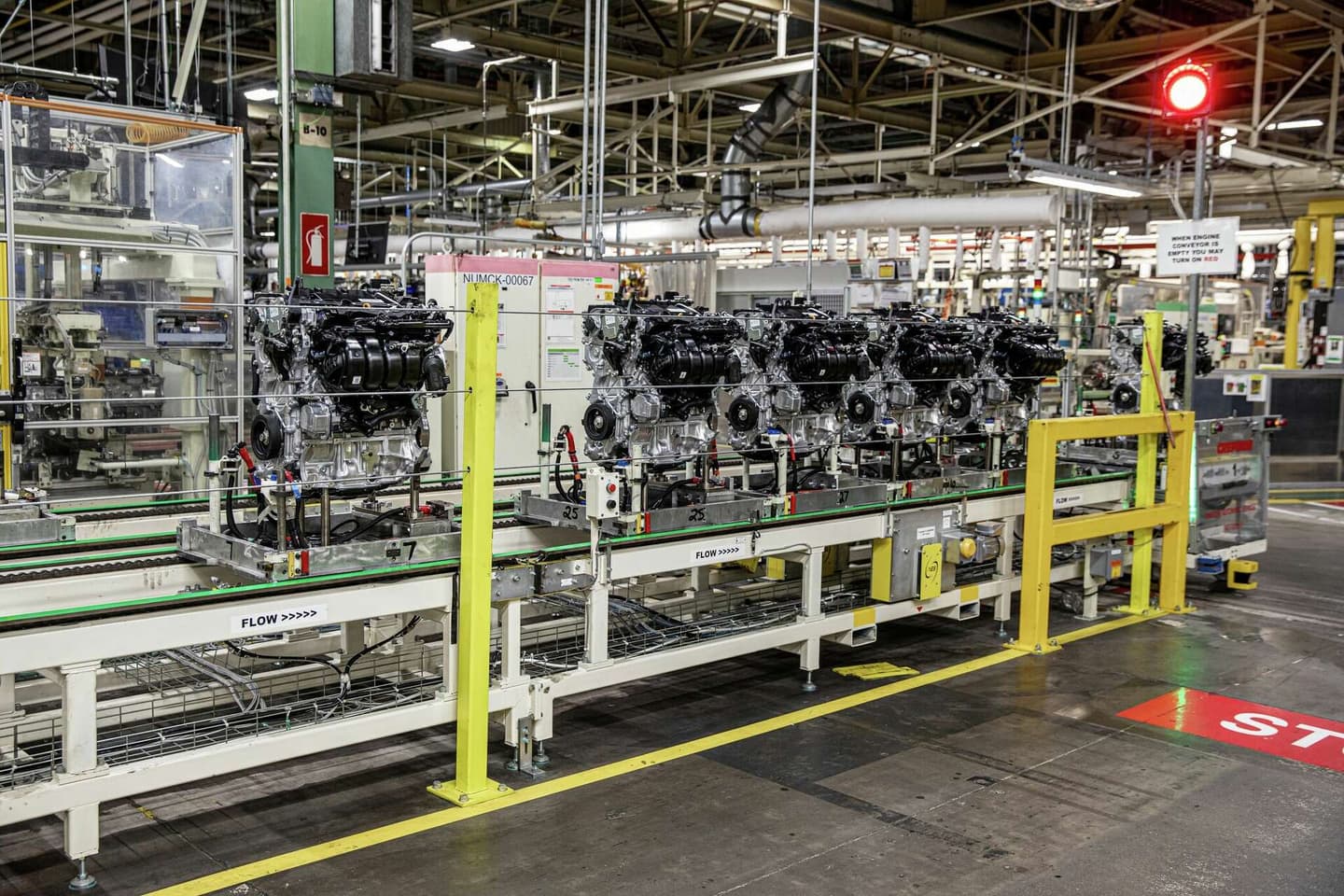
The remaining US entries cover engines and transmissions at West Virginia (TMMWV, November 1998), the Grand Highlander, Highlander, Sienna HEV and TX at Indiana (TMMI, February 1999), engines and differentials at Alabama (TMMAL, April 2003), the Tundra and Sequoia HEV at Texas (TMMTX, November 2006), the Corolla at Mississippi (TMMMS, October 2011), the Corolla Cross at the MTM plant (Mazda Toyota Manufacturing, U.S.A., Inc., September 2021) and batteries at Toyota Battery Manufacturing, North Carolina (TBMNC, April 2025). Mexico rounds out the region with Tacoma plants: TMMBC from September 2004 and TMMGT from December 2019, the Guanajuato line including the HEV version.
Two organizational notes appear on the North America page. The Bodine plants were renamed in January 2020: the Troy plant became TMMMO and the Jackson plant became Toyota Motor Manufacturing, Tennessee. And since 2017, under the "One Toyota" initiative, all North American operations - R&D, manufacturing, sales, marketing, after sales and corporate functions - are conducted under Toyota Motor North America; the page lists the predecessors TMA (1996), TEMA (2006) and TMS (1957).
Reading the list correctly
The North America table uses two abbreviations worth knowing when reading product lines: HEV for hybrid electric vehicle and PHEV for plug-in hybrid electric vehicle. So "RAV4 (incl. HEV)" means the plant builds the hybrid as well as the standard model. Note also that a product appearing under one plant is the plant's main product as published - the list is not a worldwide allocation table for every market's supply.
What these tables list
Each line in the tables carries two data points: the start of production and the main products. Toyota publishes facilities pages for further regions - Latin America, Europe, Africa, and Asia, the Middle East and others - which are outside this file. When Toyota moves a model or opens a line, the snapshot above goes out of date; the manufacturer's own facilities pages are the point of record.
How to check the result
To verify any entry, open the Global Operations facilities pages on Toyota's global website (global.toyota) and compare the "As of" date at the top of the table - August 4, 2026 for Japan, May 8, 2026 for North America at the time of writing - with the plant line you are checking; if the page has been updated since, trust the current page.